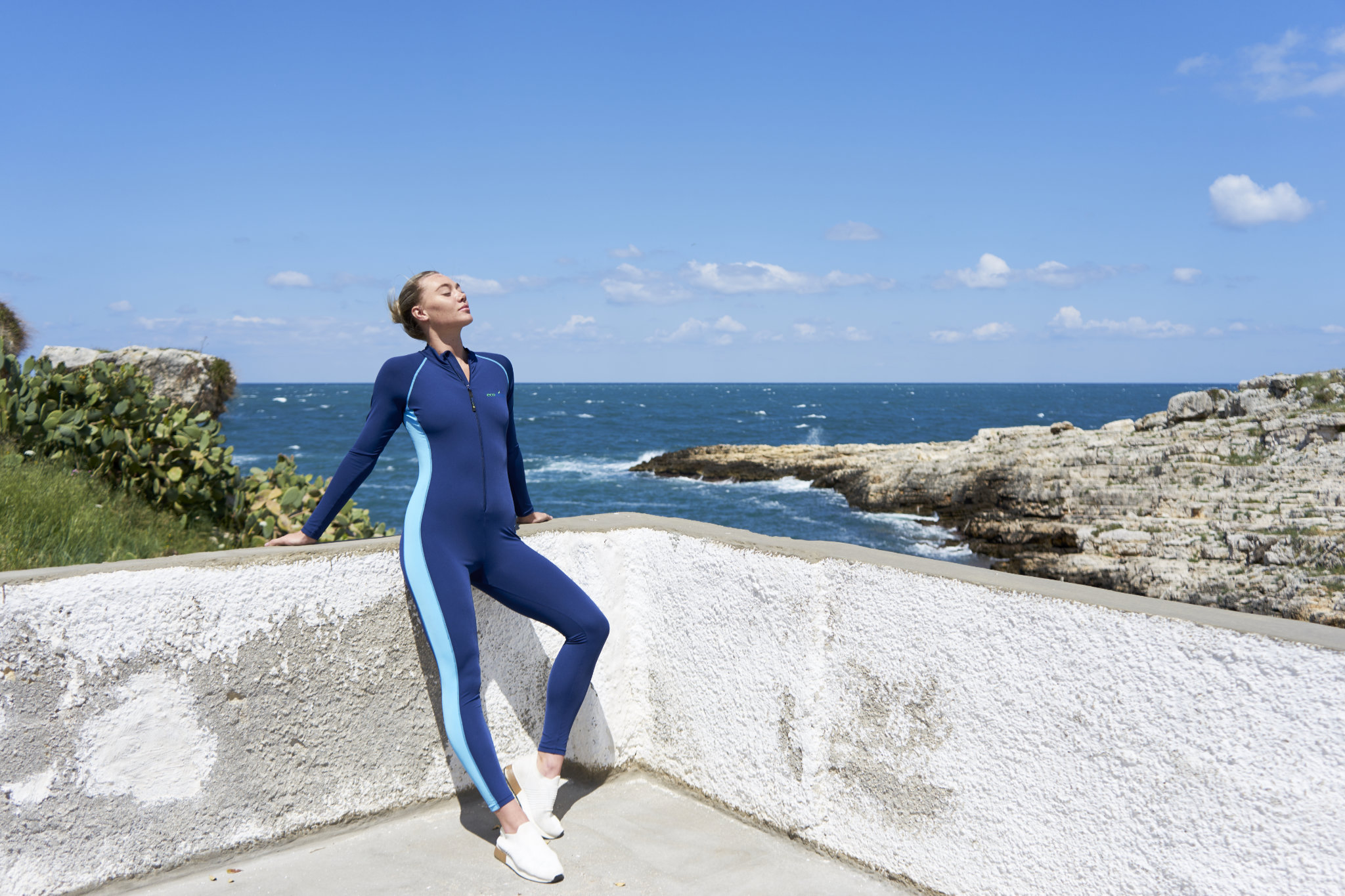
Stinger Suits
Posted by ecostinger on 15th Aug 2014
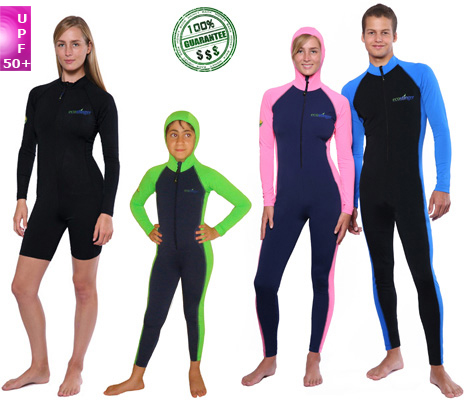
Stinger suits also known as stingers or dive skins are commonly made out of thin elastic fabric such as Lycra, Spandex, Nylon, Polyester or PBT which is the best material you can find providing excellent uva and uvb protection and protect against Jellyfish stingers and sea lice. These suits are available in all age group from girls and boys age 2 and women sizes starting from size XS and covering up to men sizes of 3XL.
A Stinger suit or dive skin can be used in warm and lukewarm waters for swimming, diving or extreme water sports, but is not suitable for cold waters where the water temperature drops below 25 °C (77 °F). It can also be worn inside a diving wetsuit; Most divers will tell you how hard it is to put on and take off a wetsuit made of rubber or neoprene, this is where the thin fabric stinger suit can help, by wearing it first you can easily slide in or take off a wetsuit even when wet.
Stinger suit can also be worn to use when you are out doing your favorite water activities, such as surfing, sailing, power boating, windsurfing, kite surfing, water skiing, caving, swimming or simply seeking protection against the sun UV radiation or against jellyfish stingers. It is very comfortable to wear and most suits include a front zipper for easy wear; some stinger swimsuits comes with back zipper and this is mostly used by professional surfers to avoid contact between the zipper and surf board when paddling.
How to put on a Stinger suit?
This depends on the design. Most stinger suits include a front zipper
starting from top of neck down to the waist line. Simply open zipper all
the way to the end possible, insert your one leg first all the way down
until your foot goes through the leg opening of the suit. Now insert
the other leg all the way until your foot goes through the suit other
leg opening. With both feet on the ground, hold the suit from both sides
and pull up all the way until reaching your waist line and the crotch
and bottom parts are firmly fitted. Adjust where necessary until you
feel comfortable with how the suit is fitting, than roll or lift the
remaining top part of the suit up (mainly the chest, shoulders and arms
part), now you can slide one arm first all the way through the sleeve
until your hand goes through the sleeve opening while at the same time
bringing the suit top part over your shoulder. Do the same for the other
arm. Simply zip up all the way and you are ready to enjoy your suit for
all type of water sports, or even for walking on the beach.
Different types of full body swimming suits? There are four main type of suits:
- Stinger Suits or Dive Skins: are fairly inexpensive and commonly used when diving in water temperatures above 25 °C (77 °F). They are traditionally made from Spandex or Lycra and provide little thermal protection, but do protect the skin from jellyfish stings, sea lice, abrasion and sunburn. New generation suits are made from high quality fabric that offers chlorine resistance and UPF50+ UV cover. This kind of suit is known as a Stinger Suit or Dive Skin. Some divers wear this kind of suits under a wetsuit, which allows easier donning and provides additional comfort and skin relief for those who experience skin problems from neoprene.
- Wetsuits: these are Neoprene and rubber suits that are used in water temperature between 10 and 25 °C (50 and 77 °F). The neoprene part of the suit insulates the wearer. Even though water can still enter the suit, a tight fitting suit prevents excess heat loss because only some of the water warmed inside the suit escapes from the suit.
- Semi-Dry Suits: are a thick wetsuit with better seals at wrist, neck and ankles openings. They are used mainly in water temperature between 10 and 20 °C (50 and 68 °F). The seals limit the amount of water getting in and out of the suit. The user gets wet in these type of suits but the water that enters is warmed up and does not leave the suit easily, so the user remains warm.
- Drysuits: are made of neoprene and rubber and used where water temperature is between -2 and 15 °C (28 and 59 °F). Water is prevented from getting into the suit by seals at the neck and wrists; also, getting the suit on and off normally a zipper, is waterproof.