
Boys Swimsuit: Full-Body Sun and Sting Protection
Posted by ecostinger on 18th Sep 2026
When your son spends six hours at the beach, the swimwear he wears decides how much skin is exposed to the sun for those six hours. For long days in the sun and water, a boys swimsuit in UPF50+ fabric, also called a stinger suit, dive skin, or sunsuit, gives the most practical coverage, because UPF50+ fabric blocks more than 97.5% of solar UV radiation according to ARPANSA, and it keeps arms and legs covered without hourly sunscreen reapplication on those areas.
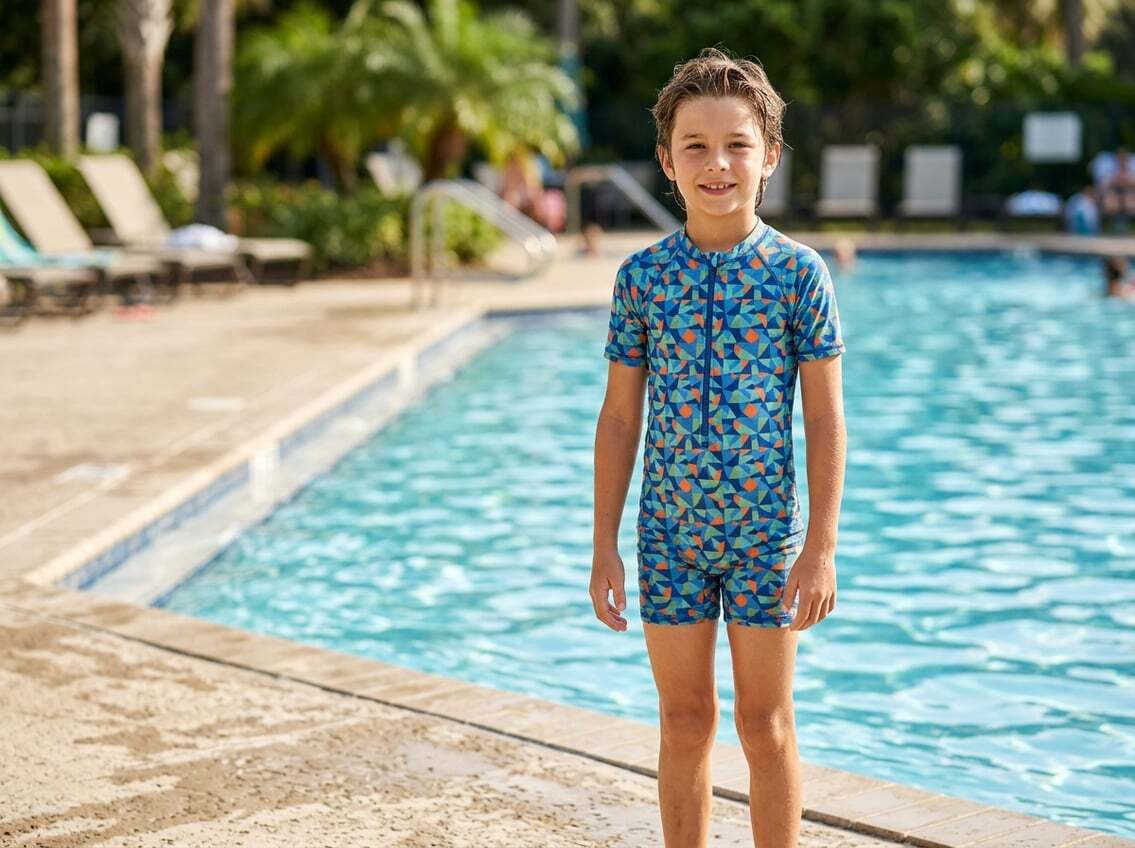
EcoStinger® has specialized in full-body swimwear for boys, girls, men, and women for years, with UV fabric tested by Bureau Veritas, the French testing and certification company founded in 1828. The focus stays on what changes real-world protection: tight fabric knit, fabric composition, garment weight, and how much of the body stays covered.
There is a second reason parents in tropical waters ask about these suits. A full-body design also puts a stretch-fabric layer between skin and jellyfish stingers during ocean swims and snorkeling trips.
The good news for boys who resist being fussed over: a modern stinger suit looks like dive gear or a surf suit. That sporty look does more for compliance than any lecture about sunburn, and you'll be able to weigh it fairly against trunks, board shorts, and jammers by the time you finish reading.
What Is a Full-Body Stinger Suit for Boys?
A full-body stinger suit for boys is a one-piece or two-piece swimsuit in stretch fabric that covers the torso, arms, and legs, sized snug to the body so it stays put during active swimming. The style comes from Australian waters, where swimmers wear Lycra suits as a layer against sea stingers and harsh sun.
How Full-Body Swimwear Differs From Standard Swimwear
Standard trunks leave the shoulders, back, chest, and legs open to direct sun. Full-body swimwear is built around coverage first, with fashion-led cuts taking second place to how much skin stays under fabric.
The fit is also snugger. EcoStinger® UV swimsuits are designed to be more fitted to the body than regular swimwear, which is why the brand recommends choosing one size up from your son's usual swimwear or clothing size.
Stinger Suits, Dive Skins, and Sunsuits Explained
These three names describe closely related garments:
- Stinger suit: full-length sleeves and legs, worn as a layer against jellyfish stingers and sun
- Dive skin: the same full-coverage concept worn under or instead of a wetsuit for snorkeling and diving
- Sunsuit: a one-piece with short sleeves and shorter legs, a lighter option for pool days
EcoStinger® boys' styles include long-sleeve full-body stinger suits at $54.90 and short-sleeve one-piece sunsuits at $44.90, both in chlorine-resistant UPF 50+ fabric.
Why a Sporty Full-Coverage Look Appeals to Boys
Boys who refuse a wide-brim hat will often wear a suit that reads as athletic equipment. Navy blue and navy lime colorways, contrast paneling, and the scuba-adjacent silhouette give the suit a purpose beyond sun protection.
That matters at the age when a child starts choosing his own clothes. A suit he picks himself gets worn all day; one he was talked into comes off after twenty minutes.
Why More Coverage Matters in Sun and Water
More covered skin means less skin depending on sunscreen that washes off, rubs off, or gets missed. Coverage works consistently for as long as the suit is on, which is the practical advantage during a full day of swimming and sand play.
Helping Reduce Exposure to UVA and UVB Rays
Fabric blocks UV radiation by physically standing between the sun and the skin. EcoStinger® fabric carries a UPF 50+ rating, and ARPANSA states that this rating blocks over 97.5% of the sun's UV radiation.
Excessive exposure to solar UV rays causes sunburn and skin damage and contributes to skin cancer risk over a lifetime. Building protective habits from an early age helps preserve the skin's natural elements.
Creating a Barrier Between Skin and Jellyfish Stingers
A full-body Lycra-type suit puts fabric between skin and stinging cells during ocean swims, snorkeling, and boating stops. Swimmers in stinger-prone waters have used this approach for decades.
No swimsuit eliminates the risk. Exposed hands, feet, neck, and face stay vulnerable, so local warnings, netted swimming areas, and lifeguard advice still guide where and when your son swims.
Why Sunscreen Still Belongs in a Sun-Safety Routine
Sunscreen covers everything fabric cannot: face, ears, hands, feet, and any gap at the neckline or cuffs. Pair it with the suit, and reapply it on those exposed areas after swimming and towel drying.
Clothing and sunscreen work as a pair. Neither replaces shade during peak hours or adult supervision in the water.
Choosing Swimwear for Beach Days, Pools, and Training
Match the garment to the length of exposure and the activity. Short pool sessions, competitive training, and all-day beach holidays each favor a different cut, and most families end up owning two of the three.
When Shorts and Board Shorts Make Sense
Shorts and board shorts suit brief, shaded, or supervised swims: a backyard pool in late afternoon, swim lessons under a covered roof, a quick dip before dinner. They pull on fast and work as casual wear straight off the beach.
Their limit is coverage area. The shoulders, back, and chest stay exposed, so those areas rely entirely on sunscreen and reapplication discipline.
How Boys' Competition Swimsuits and Jammers Differ
Boys' competition swimsuits and jammers are cut for speed and legality in sanctioned meets. Retailers such as SwimOutlet stock jammers alongside trunks and board shorts in athletic sizing from 22 to 44.
Jammers hug the thighs and end above the knee, giving more leg coverage than briefs while keeping the torso bare. They are built for indoor pools and racing, and a swim team suit is a separate purchase from a beach holiday suit.
When Full-Body Coverage Is the Better Choice
Full-body coverage earns its place on beach holidays, snorkeling trips, boat days, and any outing that runs from late morning through afternoon.
| Board shorts | Jammers | Full-body suit | |
|---|---|---|---|
| Arms covered | No | No | Yes |
| Legs covered | To knee | To above knee | To ankle |
| UPF 50+ fabric | Varies by brand | Varies by brand | Yes (EcoStinger®) |
| Best setting | Short casual swims | Swim team, training | All-day sun and open water |
| Sting-contact layer | No | No | Yes, on covered skin |
Parents comparing coverage across sizes can browse the boys' UV protection swimwear range to see how full-body and short-sleeve options differ.
What to Look for in a Protective, Comfortable Fit
Three things decide whether a protective suit performs and gets worn: how tightly the fabric is knitted, how well it fits, and how fast it dries. Fabric composition and garment weight sit behind all three.
Why UPF 50+ and a Tight Knit Matter
Regular swimwear fabric is not automatically sun-protective. Stretch fabrics such as nylon, Lycra, elastane, spandex, and polyester only reach UV-protection status when knitted tightly enough to stop UV radiation from passing through the gaps.
Garment weight tells you something too. EcoStinger® cites weights such as 180 gsm and 200 gsm across nylon/Lycra and polyester/PBT constructions, and holds a UPF 50+ rating verified through Bureau Veritas testing.
Selecting the Right Size for Easy Movement
Snug is the goal, tight is the problem. A suit that fits close keeps fabric flat against the skin without sagging or letting water channel underneath.
Because UV swimsuits run more fitted than standard clothing, size up one from your son's usual swimwear size. Check that he can rotate both arms overhead and squat fully before the suit leaves the house.
Quick-Drying, Durable Fabrics for Active Boys
Quick-drying fabric keeps a boy from sitting in cold, heavy swimwear between swims. Chlorine-resistant construction protects the suit through a season of pool use, where standard swimwear fabric loses elasticity and color.
Look for flat seams that sit smoothly under arms and behind knees. Those are the spots where a suit chafes on the third hour of wear.
A More Confident Choice for Long Days in the Water
A full-body boys' swimsuit answers the practical problem families face on beach holidays: keeping arms, legs, and torso covered through hours of sun without re-doing sunscreen every twenty minutes. UPF 50+ fabric blocks more than 97.5% of solar UV radiation per ARPANSA, and the full-length cut adds a stretch-fabric layer during ocean swims where stingers are a concern.
Board shorts still make sense for a short evening swim, and jammers belong in the swim team bag. For the long, bright, open-water days, coverage plus a suit your son likes wearing is what holds up.
Size up one from his usual swimwear size, check the arm and leg range of motion at home, and keep sunscreen on his face, hands, and feet.
Frequently Asked Questions
What are boys' swimsuits called?
Boys' swimsuits go by several names depending on the cut: trunks and board shorts for loose shorts styles, jammers and briefs for competition, and stinger suits, dive skins, or sunsuits for full-coverage designs. Retailers also use "bathing suit" and "swimwear" interchangeably for all of them.
What is a full-body stinger suit for boys?
It is a snug-fitting one-piece swimsuit in stretch fabric that covers the torso, arms, and legs down to the ankles. EcoStinger® makes these in chlorine-resistant UPF 50+ fabric, priced at $54.90 for long-sleeve navy blue and navy lime styles.
Can a full-body boys' suit help protect against jellyfish stingers?
A full-body suit puts fabric between skin and stinging cells on every area it covers, which is why swimmers in stinger-prone waters have worn Lycra suits for decades. Hands, feet, face, and neck stay exposed, so heed local warnings and swim in netted or patrolled areas.
Is UPF 50+ swimwear enough without sunscreen?
No. UPF 50+ fabric protects the skin it covers, and sunscreen handles the face, ears, hands, feet, and any exposed gap at the neckline. Use both, and add shade during the brightest hours.
What is a good swimsuit for a 10- or 12-year-old boy?
For beach holidays and snorkeling, a long-sleeve full-body UPF 50+ suit works well at this age because it reads as sporty dive gear and covers the most skin. For swim team practice, a jammer in athletic sizing is the right purchase.
Are board shorts or a full-body suit better for the beach?
A full-body suit is the stronger choice for a full beach day, since it covers arms and legs that board shorts leave to sunscreen alone. Board shorts suit short swims, shaded pools, and the walk back for lunch.