
Full Body Swimsuits for Men: Why Australians Wear Them
Posted by ecostinger on 19th Oct 2026
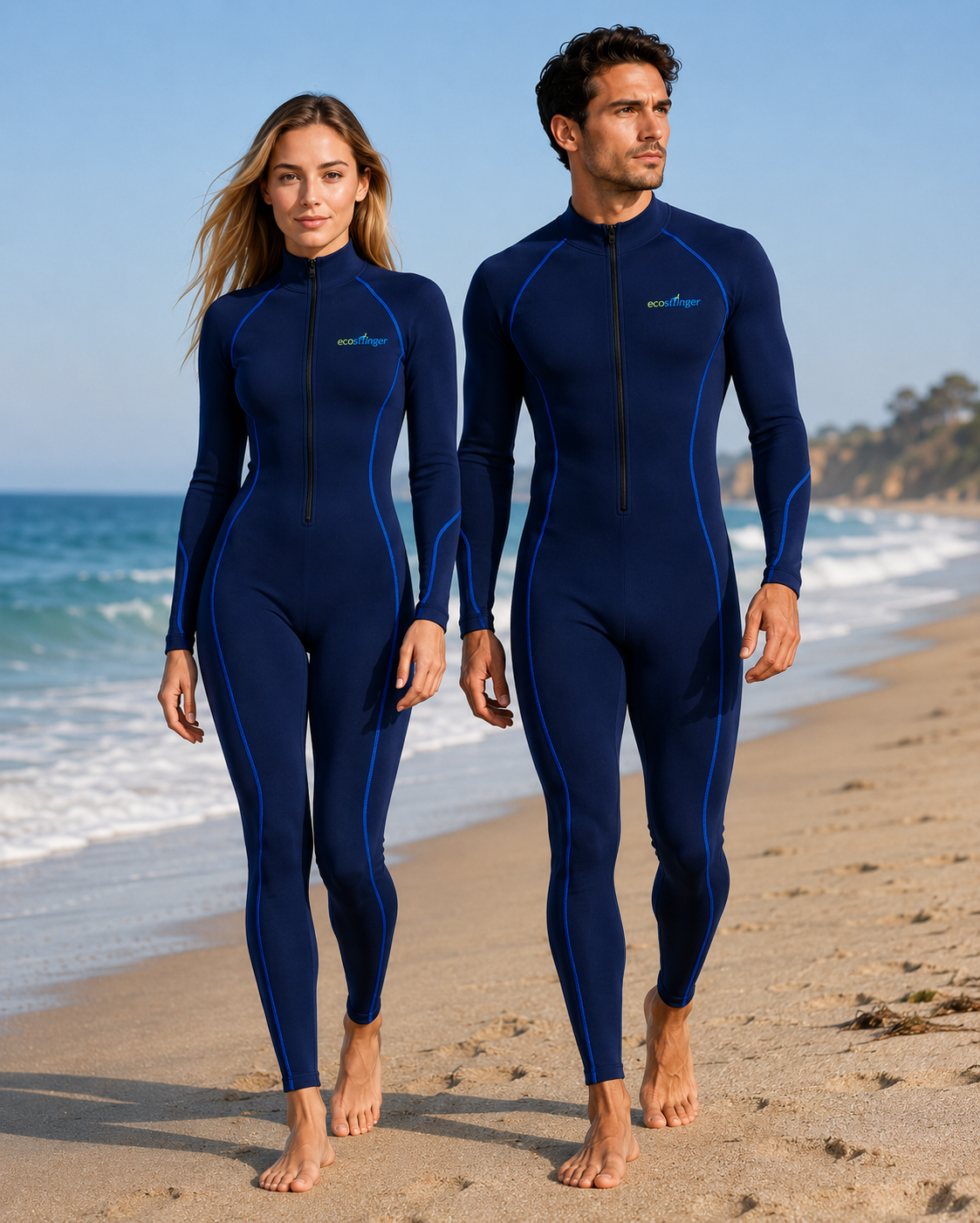
A men's full-body swimsuit is a close-fitting, lightweight suit that covers your torso, arms and legs, and often your neck. In Australia, these suits go by several names, including stinger suit, dive skin and full-coverage swimwear.
Australian swimmers and surfers wear full-body swimsuits because thin UPF 50+ fabric shields large areas of skin from strong sun, and purpose-built stinger suits add a physical barrier against jellyfish tentacles in tropical waters. The thin fabric stays comfortable in warm water, where a neoprene wetsuit would feel hot and bulky.
The protection has limits. Your hands, feet and face stay exposed, and not every long-sleeved suit is designed for marine stingers. Once you know those gaps, you can pick coverage that suits your swimming, surfing and the beaches you plan to visit.
What Does a Men's Full-Body Swimsuit Cover?
A men's full-body swimsuit covers you from neck to ankles and wrists, using thin stretch fabric that sits close to your skin. Styles range from a single zip-up suit to a top-and-legging set, and they sit apart from both insulating wetsuits and short swimwear like swim briefs.
How Do One-Piece Suits and Two-Piece Sets Differ?
A one-piece full-body swimsuit runs as one garment from collar to ankle, with a front or back zip. It leaves no gap at the waist, which helps when you dive under waves or kick hard in open water.
A two-piece set pairs a long-sleeved rash guard (also called a rash vest or swim shirt) with full-length swim leggings. You can wear the top alone on a hot afternoon, and it is easier to remove for a toilet stop. The trade-off is the waistline, where the top can ride up and expose skin.
Are Stinger Suits, Dive Skins, and Wetsuits the Same?
Stinger suits and dive skins are close cousins; wetsuits belong to a different category. Stinger suits and dive skins both use thin nylon and spandex blends, built for sun and sting coverage in warm water. Many brands use the two names for the same garment.
Wetsuits are made from neoprene, a rubber foam that traps a thin layer of water your body warms up. That makes them suited to cool water. A stinger suit gives you almost no warmth, buoyancy or impact padding.
How Does Full Coverage Compare With Conventional Swimwear?
Full-body swimwear covers far more skin than a standard bathing suit. Swim briefs and jammers leave your back, shoulders and arms bare, and those spots burn first during a long session. A full suit protects them with fabric, so you only need sunscreen on what stays uncovered.
The cost is time. A full suit takes longer to pull on, and it feels warmer on the sand between swims.
Why Do Australian Swimmers and Surfers Choose Full Coverage?
Australians choose full coverage mainly for steady sun protection and, in the tropical north, for a barrier against marine stingers. Lightweight fabric also keeps long warm-water sessions comfortable, which explains why you see these suits on surfers, snorkellers and families alike.
How Does UPF 50+ Fabric Help With Sun Protection?
UPF (Ultraviolet Protection Factor) measures how much UV passes through fabric. A UPF 50+ rating means the fabric lets through only a small fraction of UV rays, roughly 2 percent or less.
That matters on Australian beaches, where water and sand reflect sunlight back at you. Sunscreen washes off and gets missed on your back and the back of your neck. A rated suit gives even coverage that does not need reapplying. Stretched, worn or see-through fabric protects less, so replace a suit once it thins.
What Protection Can Stinger Suits Offer Against Jellyfish?
Stinger suits reduce stings by keeping tentacles off covered skin. In northern Australian waters, box jellyfish and Irukandji are the main concerns, especially during the warmer months.
A dense, tight knit makes it hard for tentacles to reach skin through the fabric. Exposed areas remain at risk, including your hands, feet, face and any gap at the cuffs. A UPF label tells you about sun protection only; it says nothing about stings. Check that a suit is sold for marine-stinger protection before relying on it.
Why Is Lightweight Coverage Useful for Warm-Water Activities?
Thin stretch fabric lets you stay covered for hours without overheating. Neoprene holds heat, which suits cold southern breaks and feels stuffy in 26°C Queensland water.
A light suit also moves freely at your shoulders and knees, so it works for swimming, snorkeling and other water sports. It dries fast and doubles as beachwear between swims.
How Do You Choose the Right Suit for Australian Conditions?
Choose your suit by first deciding how warm the water is and what you will do in it. Thin full-body swimwear suits warm-water swimming and snorkeling, while cooler southern surf calls for neoprene.
Which Features Matter for Swimming, Snorkeling, and Diving?
For open water swimming, look for flat seams and a smooth collar, since repeated arm strokes rub at the neck and underarms. Test the suit on a training swim before any long event.
For snorkeling and diving in warm water, a hood, thumb loops and foot stirrups cover more skin and keep sleeves and legs from riding up. If you train in pools often, pick chlorine-resistant fabric. Range listings such as EcoStinger's men's full body swimsuits stinger suits and dive skins state both the UPF rating and chlorine resistance, which makes comparison easier.
When Do Surfing and Paddling Call for Different Gear?
Surfing in tropical water works fine in a stinger suit or long-sleeved rash vest. Once water drops to around 21°C, as it does along much of the NSW coast in spring and autumn, a 3/2 mm wetsuit keeps you warm enough to stay out. Victoria and Tasmania call for 4/3 mm or thicker in winter.
For paddleboarding and kayaking, sun exposure is the bigger issue. Check the suit stays flat under a buoyancy aid, and wear the right flotation for your craft.
How Should Fit, Fabric, and Coverage Guide Your Choice?
Aim for a close fit that still lets you raise your arms and bend your knees. Loose fabric drags, shifts and opens gaps at the wrists and ankles.
Choose a dense nylon or polyester blend with four-way stretch. Then match coverage to risk: full arms, legs and a hood for stinger season, and a simpler long-sleeved set for sun cover in the pool.
How Do You Wear and Care for a Full-Body Suit?
Good habits before and after each swim keep your suit protecting you. Small gaps let in stingers and sun, and salt and chlorine wear the fabric over time.
Check Cuffs, Zips, and Exposed Skin Before Entering the Water
Before you get in, make sure the zip is fully closed and the collar sits flat. Pull sleeves down to your wrists, using thumb loops if your stinger suit has them. Look at your ankles and the back of your neck, which are easy places to leave bare. In stinger season, gloves and booties close the remaining gaps.
Follow Beach Warnings and Use Sunscreen Where Needed
Protective swimwear works alongside local safety advice. Swim between the flags, use stinger nets where provided, and stay out when signs or lifeguards warn of marine stingers.
Apply broad-spectrum, water-resistant SPF 30 or higher sunscreen to your face, ears, hands and feet. Reapply after towelling off or long swims to keep your sun protection steady.
Rinse, Dry, and Inspect the Fabric After Use
Rinse your suit in fresh water after every swim, paying attention to zips and seams where salt builds up. Squeeze out water gently without wringing. Hang it in the shade, away from direct heat. Check for thin patches or snags each time, as worn fabric lets through more UV.
Choose Coverage That Matches Your Water Conditions
A full-body swimsuit gives you broad skin protection through thin UPF fabric, and a purpose-made stinger suit adds a barrier against tentacles in tropical water. Neither replaces a wetsuit in cold surf.
Match the suit to the water temperature and your water sports. Close every gap you can, put sunscreen on the rest, and follow local beach warnings each time you swim.
Frequently Asked Questions
What is a full-body swimsuit for men called in Australia?
Most Australians call it a stinger suit, especially in Queensland and the Northern Territory. Dive skin and UV suit are also common names. The terms overlap, so check the product details for UPF rating and sting protection.
Can I wear a full-body swimsuit instead of a wetsuit for surfing?
Yes, in warm tropical water a full-body swimsuit works well for surfing. It offers sun cover but almost no warmth or padding. In water below about 21°C, wetsuits keep you comfortable far longer.
Does every full-body swimsuit protect against jellyfish stings?
No. Only suits made with a dense, tight-knit fabric for marine stingers are designed to block tentacles, and even those leave hands, feet and face exposed. A UPF 50+ label covers sun protection alone.
What should I wear underneath a men's full-body swimsuit?
Swim briefs or jammers are the most common choice under a full-body swimsuit. They add a layer of modesty and comfort when you unzip on the beach. Skip cotton underwear, which holds water and chafes.
Are full-body swimsuits banned in competitive swimming?
Yes, for elite racing. Since 1 January 2010, swimming's world governing body has allowed men only textile suits running from the waist to the knee. Recreational swimming and most open-water events for fun have no such rule, though marathon events set their own swimwear limits.