
Full Coverage Swimsuit: UV, Jellyfish And Skin Protection
Posted by ecostinger on 3rd Oct 2026
A full coverage swimsuit covers more skin than a standard cut, but how much more varies widely. In most U.S. retail listings, "full coverage" describes the bottom: a higher rise and a back panel that covers the seat completely. For sun, marine stings, or hours of active play, you need a suit that covers your torso, arms, and legs, made from fabric with a tested UPF rating.
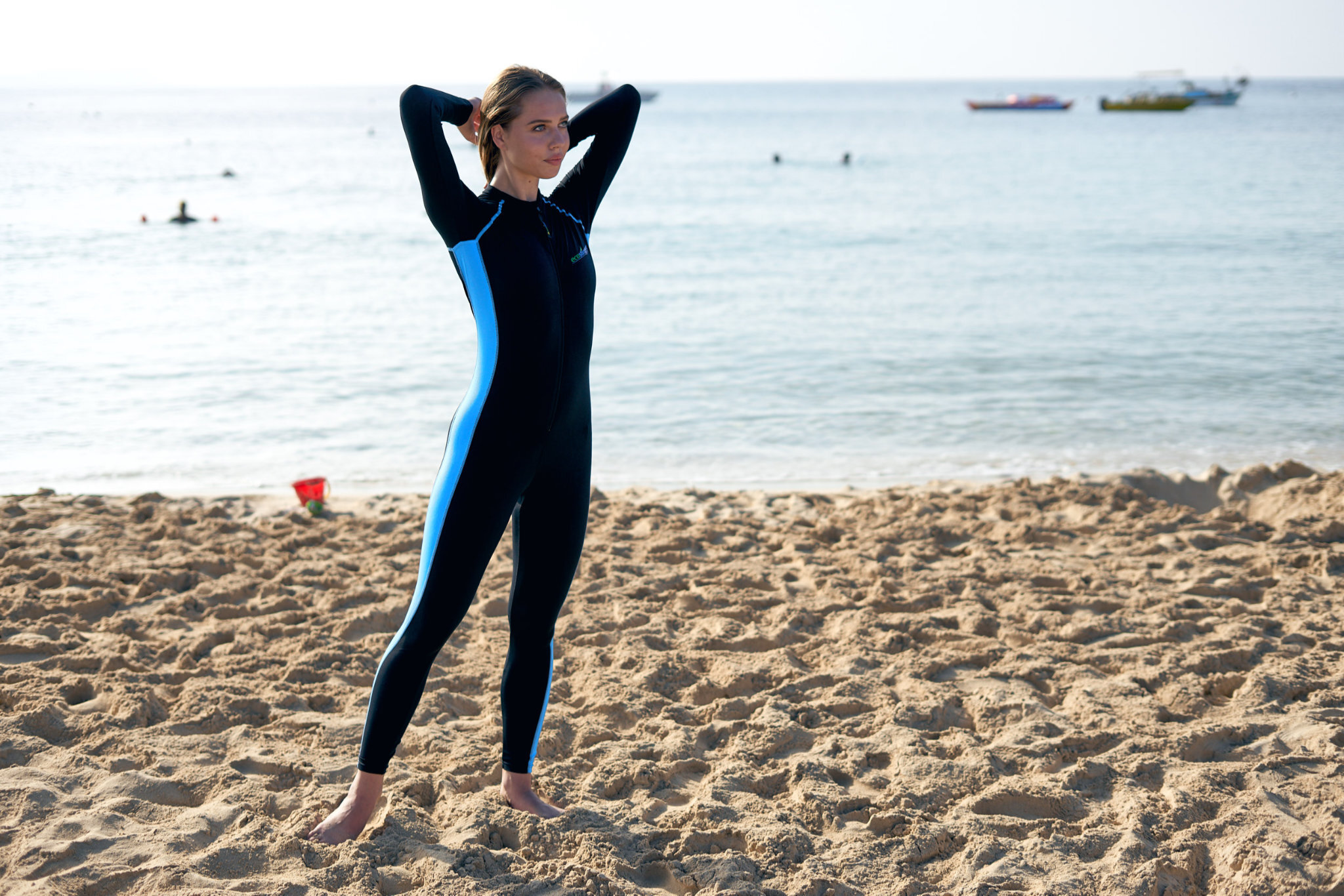
That difference decides what the suit can do for you. A full-seat bikini bottom keeps you from tugging at your hem, while a long-sleeve UPF 50+ swimsuit blocks most UV from the skin it covers.
Neither one is protective equipment. Covered skin reduces exposure to sun, jellyfish tentacles, and abrasive sand. Your face, hands, and feet stay bare, and conditions still count. Once you know which kind of coverage you need, the label tells you far more.
What Does Full Coverage Actually Cover?
Full coverage covers whatever fabric touches, and nothing more. Retail cuts protect your hips and seat. Full-body suits and stinger suits extend that coverage to your arms, legs, and neck, which is where most sun and sting exposure happens.
Full-Bottom vs. Full-Body Coverage
Full-bottom coverage is what most product filters mean. Look for these features:
- A high or mid-rise waist
- A full seat panel at the back
- Boyshort, swim skirt, or swimdress styles that extend onto the thighs
Full-body coverage includes long sleeves, a high neckline, and legs that reach the ankle or knee. Rash guards with swim leggings, one-piece surf suits, and stinger suits fall into this group. If your goal is comfort and modesty, full-bottom cuts are enough. If your goal is protecting your skin, you need full-body coverage.
How Does UPF Fabric Help Block UV Radiation?
UPF (Ultraviolet Protection Factor) measures how much UV passes through fabric. A UPF 50 rating means about 1/50 of UV gets through, so the fabric blocks roughly 98%.
Keep these limits in mind:
- UPF applies only to covered skin. Your face, neck, hands, and feet still need sunscreen.
- Fabric that is overstretched, worn thin, or soaked transmits more UV on some materials.
- An unlabeled suit has unknown protection, even when it looks opaque.
Dense synthetic knits in darker colors tend to hold their rating well. Check the tag for a stated UPF value.
Can a Stinger Suit Reduce Box Jellyfish Sting Risk?
A stinger suit reduces sting risk by keeping tentacles off the skin it covers. These thin, full-length Lycra suits are standard wear in tropical waters such as northern Australia, where box jellyfish are seasonal.
They have clear limits. Your face, hands, and feet stay exposed. Small species such as Irukandji can still reach bare skin. A suit makes contact less likely and does nothing to make swimming sting-proof. Pair it with these habits:
- Swim at patrolled beaches inside stinger nets during the season.
- Follow posted warnings and lifeguard advice.
- Know the local first aid. In Australian box jellyfish regions, that means calling for help and dousing the sting with vinegar.
How Does Coverage Help with Sand and Abrasion?
Coverage puts a layer between your skin and sand, board wax, and rough surfaces. Long legs and sleeves cut down on the chafing from surfing, bodyboarding, or rolling in shore break.
Sand still gets inside. It collects in seams, waistbands, and loose bottoms, and a loose suit can rub more than a fitted one. Choose snug cuffs and flat seams, and rinse the suit and your skin after a session.
How to Choose the Right Suit
Pick your suit by starting with your activity, and then confirm that the fabric and fit hold up once wet. A pool lap suit, a snorkeling suit, and a surf suit need different coverage. Weak fabric or a poor fit undoes good coverage the moment you get in the water.
Match the Cut to Your Activity and Exposure
Base your choice on how long you spend in the sun and water, and how you move:
- Lounging and short dips: A full-bottom one-piece, tankini, or swimdress, plus sunscreen and shade.
- Laps and water aerobics: A secure one-piece with a high back, sturdy straps, and a full seat.
- Snorkeling and long midday sessions: Long sleeves and leggings in UPF 50+ fabric.
- Tropical waters in jellyfish season: A full-length stinger suit, used along with local safety rules.
- Surfing and bodyboarding: A fitted rash guard or surf suit with long legs to limit abrasion.
Check Fabric, Fit, and Coverage When Wet
Test the suit before you trust it, because a wet suit fits differently than a dry one. While trying it on:
- Move. Squat, reach overhead, and lunge. The suit should stay in place without bunching or riding up.
- Check the stretch. Hold the fabric up to light while it is stretched. If you can see through it, coverage and UPF both drop.
- Feel the weight. Flimsy fabric thins and bags after a few weeks of chlorine and salt.
- Look at the back. A sagging seat on a dry suit sags further when wet.
- Read the tag. Look for a stated UPF value and a lining in light colors.
The suit should feel snug without restricting your breathing.
Choosing Coverage That Fits Your Day
Read "full coverage" as a description of a cut, then match it to the risk you face. Full-bottom suits handle comfort and modesty. Full-body suits in UPF-rated fabric protect more of your skin from sun, tentacles, and sand. Confirm fit and fabric with a wet-movement test, and keep using sunscreen, local warnings, and first aid knowledge for the skin your suit leaves bare.