
Full Coverage Swimsuit Women: Sun and Sea Protection
Posted by ecostinger on 6th Oct 2026
You have more choices than ever if you want extra coverage at the water, from high-neck one-pieces to full-length stinger suits. The catch is that "full coverage" has no fixed definition. In most U.S. retail listings, it describes a higher-rise bottom that covers the seat completely, while other brands use it for suits that reach the wrists and ankles.
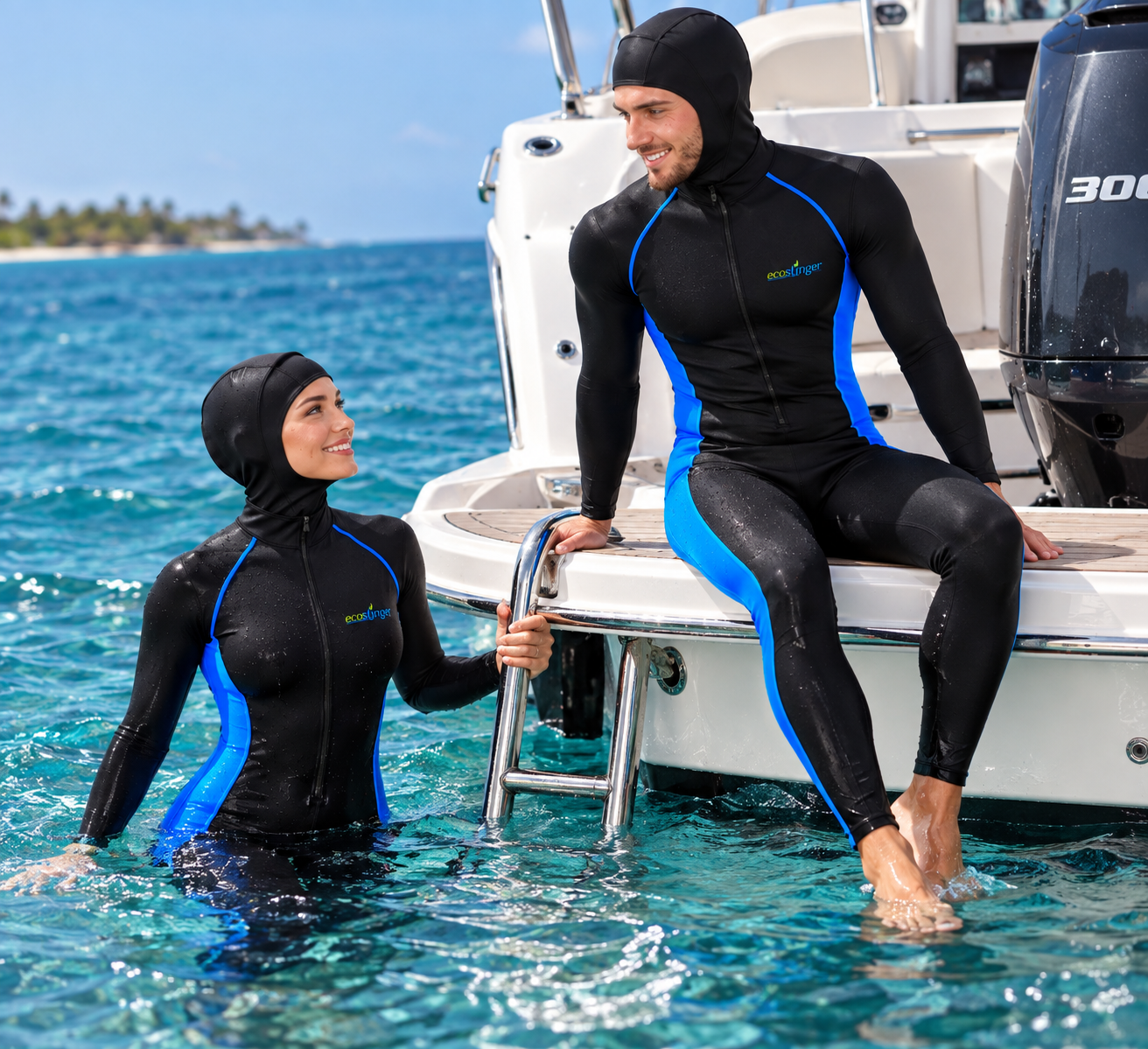
If your goal is sun and sea protection, choose a full coverage swimsuit for women that covers your torso, arms, and legs and carries a tested UPF 50+ rating, then apply sunscreen to every patch of skin the suit leaves exposed. A modest cut with no UPF label gives you coverage, though its sun protection is unverified.
Coverage also helps with jellyfish tentacles, sand abrasion, and pool-deck scrapes, but no suit guarantees you won't get stung. Once you know what each style covers and how UPF works, you can pick a suit that fits the way you swim. Measure your torso, note where you plan to swim, and start comparing styles with those details in hand.
What Makes a Swimsuit Full Coverage?
A swimsuit counts as full coverage when it covers more skin than a standard cut, and the amount ranges from a fuller seat to a suit that reaches your wrists and ankles. Higher necklines, lower leg openings, sleeves, and leggings each extend coverage, and you can combine one-pieces, tankinis, and separates to reach the level you want.
Bottom coverage is where labels vary most. Some brands use a numbered scale, with the fullest option having the highest waist rise and the lowest-cut leg. Check product photos from the back and side before you buy, because "moderate" at one brand can match "full" at another.
One-Piece, Two-Piece, and Tankini Options
A one-piece gives you uninterrupted torso coverage with no gap at the waist, and it stays put during laps, water aerobics, and wave play. Long-sleeve and high-neck one-pieces add arm and chest coverage.
A high-waisted two-piece pairs a bottom that reaches your navel or above with a fuller top. Your midriff stays partly exposed, so it suits lounging and casual swimming more than vigorous activity.
A tankini combines a tank-length top with a separate bottom. You get torso coverage plus easy bathroom breaks and the freedom to size top and bottom separately. Choose a top long enough to overlap the bottom when you raise your arms.
When to Choose a Rash Guard or Swim Leggings
Reach for a rash guard or swim leggings when you'll be in strong sun for hours, snorkeling, surfing, or swimming where jellyfish are common. A fitted long-sleeve rash guard covers your arms and upper back, two areas that burn quickly when you float face-down.
Swim leggings protect your legs from sun, board rash, and coral scrapes. Some brands sell full-body suits that combine both pieces; the women's sun and stinger suits from EcoStinger are one example, sold as jellyfish protection suits, dive skins, and sunsuits in UPF 50+ fabric.
Separates give you flexibility. You can wear a rash guard over a one-piece at the beach and drop it at a shaded pool.
How Does Swimwear Protect Skin From UV Radiation?
Swimwear protects you by physically blocking UV radiation from reaching covered skin, and a UPF rating tells you how much gets through. Fabric type, fit, and moisture all change that number, and any skin the suit leaves open still needs sunscreen.
What a UPF Rating Means
UPF (Ultraviolet Protection Factor) measures how much UV radiation passes through a fabric. A UPF 50 fabric lets through about 1/50 of the UV, blocking roughly 98%.
| UPF rating | Protection category | UV blocked |
|---|---|---|
| 15–24 | Good | About 93–96% |
| 25–39 | Very good | About 96–97% |
| 40–50+ | Excellent | About 98% or more |
SPF applies to sunscreen and measures protection mainly against UVB on skin. UPF measures a textile against both UVA and UVB. Look for a stated, tested UPF on the tag; "sun-safe" wording alone tells you nothing.
Why Fabric, Fit, and Wetness Matter
The rating on the tag reflects fabric under test conditions, and real wear changes it. Three factors shift protection:
- Stretch: When a fabric stretches over your body, the weave opens and lets more UV through. A suit that's too small for you protects less than the same suit in your size.
- Wetness: Some fabrics lose protection when wet. Cotton is the classic example, which is why a cotton T-shirt over your suit falls short. Quality swim fabrics like nylon-spandex and polyester blends hold up better.
- Color and density: Dark or bright colors and tightly knit fabrics absorb or block more UV than pale, thin ones.
- Age and chlorine: Repeated chlorine exposure and wear break down fibers over seasons.
Brands that test fabric when stretched and wet will often say so. Treat that detail as a plus when comparing suits.
Where Sunscreen Is Still Necessary
Your suit covers some skin, and sunscreen handles the rest. Areas under a UPF 50+ suit need less sunscreen, which saves product and reapplication time.
Exposed spots still need broad-spectrum, water-resistant SPF 30 or higher: your face, ears, neck, hands, feet, and the edges of necklines and sleeves where fabric shifts. The tops of your feet and the backs of your hands burn easily and get missed often. Reapply every two hours and after swimming or toweling off, and add a wide-brimmed hat and sunglasses when you're out of the water.
Can More Coverage Help Prevent Stings?
More coverage reduces stings by putting fabric between your skin and jellyfish tentacles, though it can't eliminate them. Gaps and exposed skin stay vulnerable, and with sea lice, a suit can make irritation worse.
Reducing Contact With Jellyfish Tentacles
Jellyfish stinging cells fire when tentacles touch skin, and a tightly woven fabric layer blocks most of that contact. That's why full-body stinger suits are common in places like Australia and tropical dive destinations.
Your face, hands, and feet remain open unless you add a hood, gloves, or booties. Look for snug cuffs at the wrists and ankles so tentacles can't slip underneath. Coverage works alongside other habits: check beach warning flags, ask lifeguards about recent sightings, and follow local first-aid guidance, since treatment varies by species.
Why Sea Lice Can Still Cause Irritation
Sea lice (the larvae of certain jellyfish and anemones, which cause seabather's eruption) behave differently. These tiny larvae slip through leg and neck openings, get trapped against your skin, and release stinging cells when the fabric presses or rubs. The itchy rash often shows up under your swimwear.
If sea lice are reported where you swim, change out of your suit soon after leaving the water and shower with fresh water. Avoid rinsing in seawater while still wearing the suit, and wash the suit before wearing it again.
How to Choose a Suit for the Beach or Pool
The best suit for you stays in place as you move, uses fabric suited to your water, and supports you without pinching. Test fit with real movement, check the fabric content for chlorine or salt resistance, and look for straps and closures you can adjust.
Check Coverage and Fit While Moving
Try the suit on and move the way you will at the water. Raise your arms overhead, squat, bend forward, and sit cross-legged.
Watch for these signs:
- A tankini top that rides up past the bottom's waistband
- Leg openings that creep upward or a seat that shifts
- A neckline that gapes when you lean forward
- Fabric that turns sheer when stretched, which also signals lower UV protection
Wet fabric relaxes slightly, so a suit that feels snug but comfortable when dry will fit well in the water. One that's loose dry will sag once wet.
Match the Fabric to Saltwater, Chlorine, and Sand
For frequent pool swimming, choose chlorine-resistant fabrics such as polyester or PBT blends, which hold shape and color longer than standard nylon-spandex. Labels like "chlorine resistant" or a high polyester percentage point you in the right direction.
For the ocean, nylon-spandex feels soft and dries reasonably fast. Darker colors and prints hide sand and sunscreen stains. Smooth, tightly knit fabric sheds sand better than textured or crinkle finishes.
Rinse your suit in cool fresh water after every swim, hand wash with mild soap, and dry it flat in the shade. Heat and wringing break down spandex quickly.
Choose Support and Adjustability That Feel Comfortable
Support comes from built-in shelf bras, molded cups, underwire, or power-mesh lining. If you need bra-level support, look for suits sold by bra size or with underwire tops; some plus-size swimmers wear a separate swim bra underneath for this reason.
Adjustable straps, tie backs, and front zippers let you fine-tune fit and make the suit easier to get on and off, especially when it's wet. Long-torso sizes help if one-pieces pull at your shoulders. Wide straps spread weight better than thin ones over a long day.
Choose Coverage That Matches Your Swim Plans
Pick your coverage based on where and how you swim. For a shaded lap pool, a chlorine-resistant one-piece or tankini handles comfort and modesty well. For long beach days, add sleeves and leggings in UPF 50+ fabric, and keep sunscreen on your face, hands, and feet.
If you snorkel or swim where jellyfish appear, a full-body suit with snug cuffs gives you the most fabric between skin and tentacles. Where sea lice are reported, plan to change and rinse right after your swim.
Before you buy, confirm three details on the product page: the tested UPF number, the fabric blend, and back-view photos of the seat coverage. Then size for a snug fit so the fabric doesn't overstretch.
Frequently Asked Questions
What are full-coverage swimsuits called?
They go by several names, including modest swimwear, sunsuits, stinger suits, dive skins, and swim separates. Retailers also use "full coverage bottom" for high-rise cuts that cover the seat. Check product photos, since the label alone doesn't tell you how much skin is covered.
Is a one-piece or two-piece better for full coverage?
A one-piece gives you more continuous coverage because there's no gap at the waist. A tankini or high-waisted two-piece works well if you want easier bathroom breaks or need different sizes on top and bottom. Choose a tankini top long enough to overlap the bottom when you move.
Does a full-coverage swimsuit replace sunscreen?
No, it reduces how much sunscreen you need on covered areas. Your face, ears, neck, hands, and feet still need broad-spectrum SPF 30 or higher. Reapply every two hours and after swimming.
Can a full-coverage swimsuit prevent jellyfish and sea lice stings?
It lowers the chance of jellyfish stings on covered skin but can't guarantee prevention. Sea lice slip under fabric and get trapped, so change out of your suit and shower promptly after swimming where they're reported.
What full-coverage styles work well for older women?
Many women prefer one-pieces with built-in support, front zippers for easy dressing, and wider straps for comfort. Swim skirts and boy-short bottoms add leg coverage, and long sleeves in UPF fabric help protect skin that burns more easily.
What should plus-size women look for in a full-coverage swimsuit?
Look for suits sized by bra size or with underwire, power-mesh lining, and adjustable straps. Choose a size that fits snugly without overstretching, because stretched fabric loses UV protection. Tankinis help if your top and bottom sizes differ.