
Boys Swimsuit: Full Body Coverage Protection and Fit
Posted by ecostinger on 21st Oct 2026
A boys full body coverage swimsuit is a one-piece sunsuit, usually with long sleeves, a high collar, and legs that reach the ankles. Exact coverage varies by brand and by how a size fits your child, so one suit can stop at the ankle on one boy and at mid-calf on a taller one.
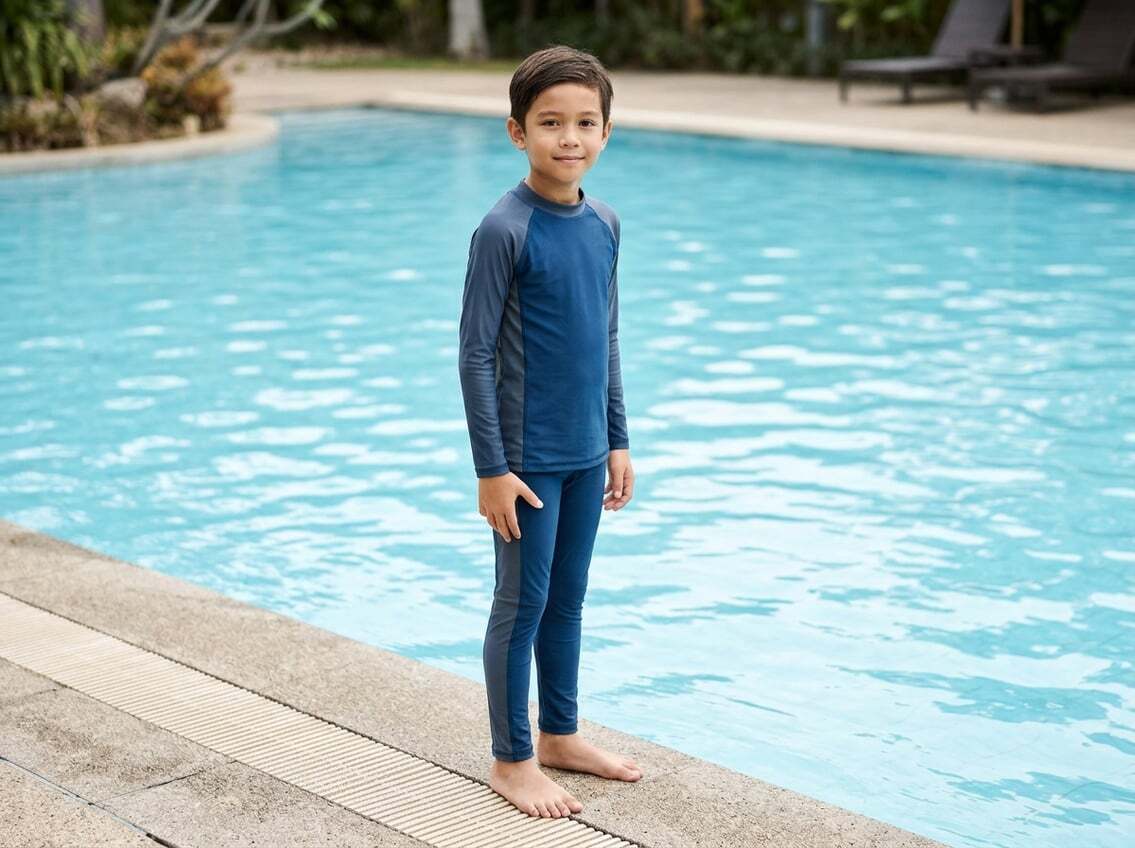
For boys and girls spending long stretches at an outdoor pool or beach, a UPF 50+ one-piece sunsuit with a full-length zipper is the most practical choice, because it shields the arms, legs, chest, and back with fabric that blocks at least 98% of UV radiation and cuts down how much sunscreen you have to apply to a squirming child.
Trunks alone leave the shoulders and back exposed, and those are the areas that burn first on a toddler bent over a sand bucket. A one-piece swimsuit also stays put during crawling and splashing, with no waistband to slide down and no gap opening at the midriff.
How Does a Sunsuit Protect Skin at the Beach or Pool?
A sunsuit works as a physical barrier: tightly constructed UPF fabric blocks UV rays from reaching whatever skin it covers, wet or dry. The rating applies only to the fabric itself, which is why exposed areas still need care, and why sun protection and sting protection call for separate answers.
What Does UPF 50+ Mean for UV Protection?
UPF 50+ is the highest rating swim fabric carries, and it means the material lets through no more than about 1/50 of UV radiation. In plain terms, at least 98% of UVA and UVB is blocked by the rated fabric.
That number describes what happens under the cloth. It says nothing about your son's face, hands, or feet. Fit also plays a part: fabric stretched thin over a suit that is too small transmits more light than the same fabric at its intended fit.
Which Areas Still Need Sunscreen?
Expect to cover the face, ears, back of the neck, hands, and the tops of the feet, plus any ankle skin left bare when the legs ride up. For children 6 months and older, a broad-spectrum sunscreen of SPF 30 or higher on those spots is standard pediatric advice.
Babies under 6 months belong in shade first, with a brimmed hat and light clothing. Pediatricians accept a small amount of sunscreen on small areas when shade isn't available. Plan your outing around the midday hours, bring an umbrella or canopy, and reapply after swimming or toweling.
Can a Full-Coverage Swimsuit Prevent Jellyfish Stings?
An ordinary UPF boys swimsuit is designed for sun protection, and you should treat it as such. Covering skin reduces direct contact with tentacles on the covered areas, though standard swim fabric carries no sting-resistance rating, and stinging cells still reach the face, hands, and feet.
Options like the boys swimsuit with full-body coverage protection are marketed for jellyfish and sea lice in addition to UPF 50+. Even with one, follow posted beach warnings and lifeguard guidance, and keep your child out of the water when stingers are reported.
How Do You Choose the Right Fit and Features?
Pick the coverage style first, then size by height and the brand's own chart, and check the construction details that decide whether your son will tolerate wearing the suit for hours. Zipper placement, seam finish, and fast-drying fabric make the difference between a suit he forgets he's wearing and one he tugs at all afternoon.
What Coverage Do Sunsuits Offer Compared with Trunks and Rash Guards?
A full sunsuit covers neck to wrist to ankle in one piece. A long-sleeve rash guard paired with boys' swim trunks protects the arms and torso but leaves the lower legs bare, and the top can ride up to expose the lower back.
Trunks alone cover only the hips and thighs. Among boys' swimwear choices, the two-piece combo suits older kids who want easy bathroom trips. The one-piece wins for babies and toddlers who sit, crawl, and dig all day.
Keep in mind that sunsuits are thin swim fabric. They add no meaningful warmth, so cold water or long sessions call for an insulating neoprene wetsuit, which is a different garment entirely.
How Should You Size a Suit for Comfortable Movement?
Size by height and use the specific brand's chart, since age labels vary widely between makers. Measure your child standing straight against a wall without shoes.
Aim for snug with free movement: no pinching at the armpits or crotch, and no extra fabric bagging up with water. Have him squat, reach overhead, and kick before you remove the tags. If he falls between sizes, sizing up buys growing room, though a one-piece that is too long in the torso pulls uncomfortably at the shoulders when it's wet.
Which Fabrics, Seams, and Zippers Matter?
Nylon or polyester blended with spandex gives you stretch, quick drying, and chlorine resistance. Flat seams reduce rubbing at the underarms and inner thighs.
Zippers vary by brand. Front zips let kids dress themselves; back zips are harder for them to open on their own; full-length zips make diaper changes faster. Look for a zipper guard or fabric backing behind the teeth, since metal or plastic heats up in the sun and chafes bare skin, plus a covered "garage" at the top so the pull doesn't press into the chin.
How Should You Care for Sun-Protective Swimwear?
Rinse the suit in fresh water right after every swim to flush out chlorine, salt, and sand. Then wash it in cold water on a gentle cycle with mild detergent.
Skip bleach, fabric softener, and dryer sheets, which coat or weaken the fibers. Air dry in the shade, and store the suit away from heat. Replace it once you see thinning fabric, faded patches, or slack elastic, because worn material blocks less UV than the rating on the label.