
Why and How Surfing Is Fun: A Sport for Every Skill Level
Posted by ecostinger on 8th Feb 2018
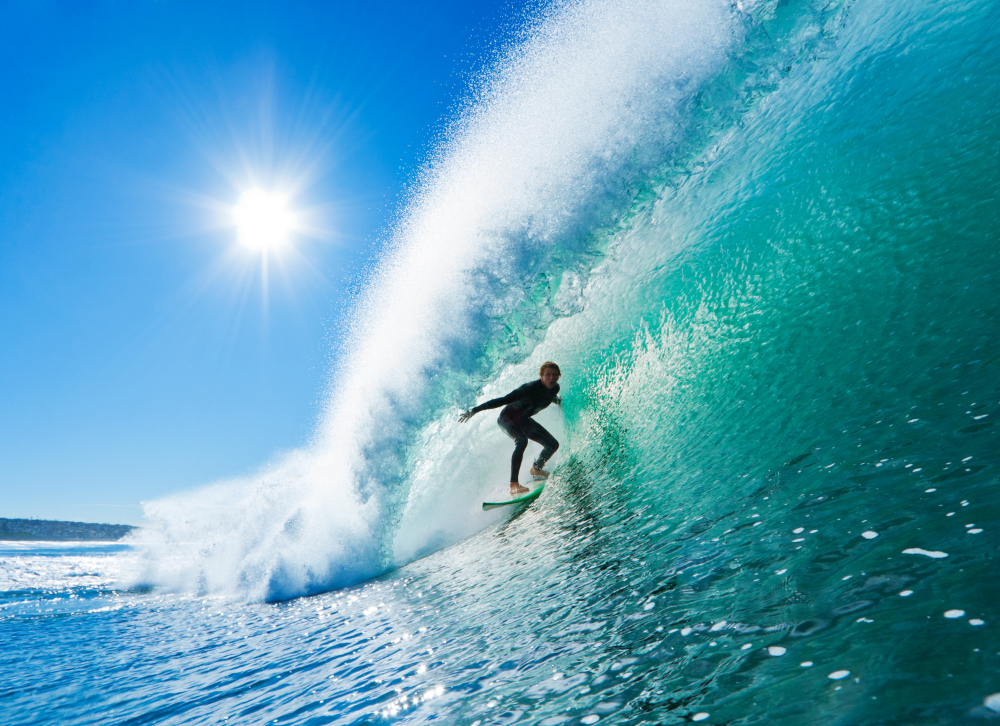
Surfing is fun because it gives you something few activities can: the feeling of being carried by moving water while you balance on a board, even if only for a few seconds. It is also a serious sport, because those few seconds depend on paddling strength, precise timing, balance, and the judgment to read conditions that change by the minute. You can enjoy both sides at once. Taking safety and progression seriously does not mean you have to compete or chase big waves.
The benefits of surfing reach beyond the ride itself. A session works your shoulders, back, core, and legs. It keeps your attention firmly in the present, and it puts you in regular contact with people who share the same stretch of coast. Researchers in Australia have found that surfers report higher personal well-being scores than the general population, with the largest gap in community connectedness.
"Everyone" deserves an honest qualifier. Surfing welcomes a wide range of ages, body types, and abilities, but it asks you to swim competently, learn from qualified instructors, use suitable equipment, and respect local conditions. Treat it as an invitation to find the right starting point for you, not a promise that every beach or every day will be safe for you.
Why Is Riding Waves So Much Fun?
Riding waves is fun because the ocean does most of the pushing once you have timed things right, and that sudden glide feels like nothing else you do on land. The novelty also never fully wears off, because no two waves or sessions repeat, and you get to shape your own approach rather than follow a set routine.
The Thrill of Catching Your First Wave
Your first real wave usually arrives after a run of near misses. You paddle, feel the swell lift the tail of your surfboard, paddle a few strokes harder, and then the board suddenly accelerates on its own. That moment of acceleration is the hook. Many beginners laugh out loud the first time it happens, even if they only ride on their stomach to the sand.
Standing up comes later for most people, and that is fine. In lessons, I see learners spend their first session getting the timing of the pop-up, the quick move from lying to standing, without much success. Then something clicks on a small, gentle wave, and they ride a few seconds upright. Those few seconds tend to rewrite how they feel about the whole morning of tumbling and paddling.
The thrill does not depend on size. A knee-high wave on a soft, wide board can feel just as exciting to a beginner as a much bigger wave feels to an experienced surfer. What matters is that the wave matches your skill.
Why Every Session Offers Something Different
The ocean never hands you the same conditions twice. Swell size, wind direction, tide, and the shape of the sandbars all shift, sometimes within an hour. A spot that offered clean, peeling waves at low tide might turn slow and mushy as the water fills in, or close out (break all at once) when the swell builds.
That variability is part of the fun, and also part of the frustration. Some days you will catch a dozen waves; other days you will paddle for an hour and ride two. Experienced surfers chase the idea of a perfect wave, but most of what keeps them coming back is the small surprise of each session: a long ride on an unexpectedly good set, a pod of dolphins passing, or simply better timing than last week.
If you go in expecting variety rather than consistency, the off days feel like part of learning instead of failure.
Finding Your Own Style Without Competing
Surfing has no referee in the water for most people, and no required moves. You can ride a long board and walk its length, ride a shorter board and turn hard, or stay on a soft-top and just enjoy straight rides toward the beach. All of these count as surfing.
Style develops from how you stand, how you shift your weight, and which waves you choose. Some surfers love smooth, relaxed rides; others love speed. Watch a crowded beach and you will see a dozen different approaches on the same day. You do not need to compare your progress with anyone else's, and the most content surfers I know rarely do. Your goal can be as simple as riding a little longer than you did last month.
What Makes Surfing a Serious Sport?
Surfing is serious because it combines several physical skills that must happen in the right order on a moving, unpredictable surface, plus an ocean awareness that takes years to build. That depth is why it challenges beginners on gentle waves and still challenges people who have surfed for decades.
How Paddling, Timing, and Balance Work Together
From the beach, surfing looks like standing on a board. In the water, it is mostly paddling. You paddle out through broken waves, paddle to stay in position, and paddle hard to match a wave's speed. If your arms and shoulders tire, everything else falls apart, which is why new surfers often feel exhausted after an hour even with few rides.
Timing links paddling to standing. Start paddling too late and the wave passes under you. Start too early, or stand too slowly, and the board pitches forward and nose-dives. The pop-up has to happen at the moment the board begins to glide, in one fluid motion, with your feet landing in roughly the right place on the surfboard.
Balance then keeps you up. You stand with knees bent, weight centered, eyes looking where you want to go rather than at your feet. Small shifts of weight steer the board. None of these skills is hard on its own, but doing all three in sequence, on water that keeps moving, is what makes progress feel slow at first.
Why Reading the Ocean Takes Practice
Reading the ocean means predicting where and how waves will break, where the water is moving, and where you should sit. It is the skill that separates surfers who catch waves from those who paddle in circles.
You learn to watch sets, the groups of larger waves that arrive between quieter spells, and to notice where they peak. You learn how a falling tide can make a sandbar break harder, how onshore wind makes waves choppy, and how a channel of calmer water often signals a current flowing back out to sea. Forecasts help, but they only describe broad conditions; the details at your particular beach come from repeated observation.
A good habit, even for experienced surfers, is to sit on the beach for 10 to 15 minutes before paddling out. Count the waves in a set, watch where other people paddle out, and look for areas where foam drifts seaward. That patience is part of the sport, not a delay before it.
From Recreational Rides to Competitive Surfing
Most surfing happens far from any contest. People surf before work, on weekends, or on vacation, simply for the ride. That recreational side is the heart of the sport for the vast majority of participants.
Competitive surfing exists alongside it and has grown considerably since the 1960s. Professional surfers are trained athletes who are judged on the difficulty, control, and flow of their maneuvers, and surfing became an Olympic sport at the Tokyo Games held in 2021. Amateur contests and club events give developing surfers a structured path if they want one.
Knowing that competitive surfing exists can help you appreciate the skill involved, but it is not a step you are expected to take. Plenty of committed surfers train, study conditions, and improve steadily without ever entering a heat.
What Are the Physical and Mental Benefits?
The health benefits of surfing come from a mix of vigorous exercise, time in natural water settings, and steady skill progress. Research on surfers shows encouraging links to well-being, though benefits vary from person to person and are best seen as a complement to, not a substitute for, other health care.
A Full-Body Workout That Builds Strength and Endurance
Surfing gives you a genuine full-body workout. Paddling builds the shoulders, upper back, and arms. Arching your chest up while paddling and holding position engages the lower back and core. Popping up and riding work your legs, hips, and the small stabilizing muscles that keep you balanced.
Because you repeat bursts of hard paddling with periods of rest while waiting for waves, a session also challenges your cardiovascular fitness in an interval-like pattern. The water supports much of your body weight, so you can work hard with less pounding on your joints than running involves. Researchers have noted that older surfers show better balance and muscle control than active non-surfers of the same age, though that kind of finding reflects people who have surfed for years.
Expect your first few sessions to leave your shoulders and neck sore. Shorter sessions, around an hour, and some land-based shoulder and core work in between help your body adapt.
How Surfing Can Support Mood and Mental Clarity
Many surfers describe leaving the water calmer than they entered. Part of that comes from exercise, which releases endorphins and can ease stress. Part comes from the setting: research on blue spaces, natural environments centered on water, links time near and in the ocean with improved mood.
Surfing also demands attention. When a set approaches, you cannot think about work emails; you have to watch, position, and commit. That forced focus gives many people a sense of mental clarity afterward. In one survey of more than 500 Australian surfers, over 75 percent agreed that surfing positively affects their physical and mental health and their ability to handle stress.
Structured surf therapy programs have also shown short-term improvements in symptoms of anxiety and depression among some young people. Those are supervised programs, though. If you are dealing with mental health concerns, surfing can be a healthy part of your routine alongside professional support, not a replacement for it.
Why Small Improvements Build Confidence
Surfing progress is uneven. You might stand up on your third session and then struggle for the next two. That unpredictability makes each small gain feel earned: your first green wave (an unbroken wave rather than whitewater), your first turn, your first time paddling out without getting pushed back to shore.
Those milestones build a practical kind of confidence. You learn that persistence pays off, that fear can be managed step by step, and that a bad day does not cancel your progress. Keeping a simple note after each session, such as conditions, number of waves caught, and one thing that went well, makes improvement visible on the days it feels absent.
How Can Beginners Start Safely and Enjoyably?
You start safely by building water confidence first, learning from qualified instructors, using a stable beginner board, and choosing gentle, supervised conditions. Respecting currents and the informal rules of the lineup protects you and everyone around you.
Who Can Learn, and What Support Might They Need?
A wide range of people learn to surf: children, retirees, people with no sporting background, and people with disabilities through adaptive programs. Age is less of a barrier than many assume, though older beginners may progress at a different pace and benefit from extra attention to fitness and flexibility.
What changes is the support you need. Young children usually learn in very small surf with an instructor close by. Adults with limited fitness may spend more time on paddling and pop-up practice on the sand. Adaptive surf organizations use modified boards and teams of trained volunteers in the water to help surfers with physical, sensory, or cognitive disabilities ride safely.
If you have a heart condition, a joint injury, or another medical concern, talk to your doctor before you start. Tell your instructor about it too, so they can adjust the lesson.
Why Swimming Confidence and Qualified Instruction Matter
Swimming is the foundation. Your surfboard will not always stay attached, leashes can snap, and you will often fall in water deeper than you can stand in. You should be comfortable swimming a reasonable distance in open water, treading water, and staying calm when a wave holds you under for a few seconds. A pool lap swim is a start, but open water feels different, so practice swimming at a lifeguarded beach first.
Qualified instruction shortens your learning curve and lowers risk. A good instructor chooses a safe area, sets you up with the right board, teaches the pop-up on land, and explains hazards such as rip currents before you paddle out. Look for schools whose instructors hold recognized surf coaching and water safety or lifeguard certifications, and that keep student-to-instructor ratios small. Surf camps can work well if you want several days of structured lessons in a row.
Choosing a Beginner Surfboard and Suitable Beach Break
A beginner surfboard should be long, wide, thick, and forgiving. Soft-top boards, with a foam deck, are common for learning because they float well, catch waves easily, and hurt less when they bump you. Many adults start on boards around 8 to 9 feet long; your instructor or a knowledgeable shop can adjust for your height, weight, and fitness. A short, narrow performance board will slow your progress, however good it looks.
A beach break is a spot where waves break over a sandy bottom, and it is often where people learn. Not every beach break suits beginners, though. Look for gentle, slow-breaking waves, a gradual sandy slope, lifeguards on duty, and few experienced surfers in the area. Avoid steep shore breaks that dump hard on the sand, spots over rock or reef, and any surf spots that locals or lifeguards describe as having strong currents. Conditions at the same beach can be beginner-friendly one day and hazardous the next.
Understanding Currents, Conditions, and Lineup Etiquette
Rip currents are the biggest everyday hazard for beginners. They look like calmer, darker channels between breaking waves, sometimes with foam or debris drifting seaward. If one pulls you out, stay on your board, do not fight straight against it, and paddle parallel to the shore until you are out of the pull, then come back in with the waves. Signal a lifeguard if you need help.
Check conditions before every session. Look at the forecast for swell size and wind, ask lifeguards about hazards, and watch the water yourself. If waves look bigger than anything you have handled, sit it out.
Lineup etiquette, the informal rules of where surfers wait, keeps everyone safe. The surfer closest to the breaking part of the wave has priority, so do not drop in on someone already riding. Paddle out wide of the main take-off area rather than through it. Keep hold of your board instead of throwing it when a wave approaches, and apologize if you get in someone's way. Those habits matter more than your skill level.
How Do Community and Culture Enrich Surfing?
Surfing's community and culture add meaning to the time you spend in the water, from friendships formed in lessons to a history that stretches back centuries in Polynesia. Local surfing communities differ widely, though, and joining one well means respecting its customs at your own pace.
Finding Connection Through Lessons, Clubs, and Surf Camps
The surfing community often starts with the people you learn beside. Group lessons and surf camps put you in the water with others at the same stage, and shared wipeouts make for easy conversation afterward. Many lasting surf friendships begin in the parking lot after a lesson.
Local surf clubs, often called boardriders clubs, offer regular sessions, coaching, and social events. Some groups focus on women, parents, older surfers, or adaptive surfing, which can make the first steps feel less intimidating. Environmental groups linked to surfing bring people together for beach cleanups and advocacy. Research on Australian surfers found that community connectedness was the area where surfers outscored the general population most clearly.
Community feels different from place to place. Some beaches are friendly and relaxed; others have tight-knit local crews who are protective of their waves. Starting with lessons or a club gives you a guided introduction to how things work at your local break.
Respecting Surfing’s Polynesian Roots and Local Traditions
Surfing began in Polynesia long before European contact, and in ancient Hawaii it carried spiritual and social significance, practiced by commoners and chiefs alike. The modern surfing era grew from Hawaii in the twentieth century before spreading to California, Australia, and beyond. Native Hawaiians played a central role in sharing wave riding with the wider world.
Respecting that history means more than wearing surf brand clothing. Learn some of the background, use Hawaiian place names correctly when you travel there, and remember that surfing remains a living cultural practice for many Native Hawaiians, not just a tourist activity. The same respect applies anywhere you surf: local communities often have long histories at their breaks, and understanding that helps you behave as a considerate guest.
Surf culture today also includes music, art, and fashion. You can enjoy any of it or none of it. You do not need to adopt a surfer identity to belong in the water.
Sharing Waves Respectfully Without Pressure to Perform
Waves are a limited resource, and crowded lineups can create tension. The best way to fit in is to be patient, follow priority rules, and avoid taking more than your share. Smile, say hello, and let a few waves pass when you first arrive at a new spot.
You do not need to prove anything. Beginners who stay in suitable areas, keep control of their boards, and show courtesy are generally welcomed far more than skilled surfers who ignore etiquette. If a spot feels hostile or too advanced, there is no shame in moving to a gentler beach.
How Does Surfing Deepen Your Connection to Nature?
Surfing deepens your connection to nature by making you pay close attention to the ocean's patterns, its wildlife, and its health. That attention can grow into travel, a wider appreciation of coastlines, and active ocean conservation.
Learning to Notice Tides, Weather, and Marine Life
Once you surf regularly, you start noticing details you previously ignored. You learn when the tide turns at your beach, how a morning offshore breeze smooths the surface, and how distant storms send swell days later. Checking the conditions becomes a habit that keeps you tuned to the coast.
Marine life becomes part of the experience too. Depending on where you surf, you may share the water with pelicans skimming the waves, seals, sea lions, or dolphins riding the same swells. Give wildlife space, and learn local guidance about seasonal hazards such as jellyfish or stingrays in shallow sand. That connection to nature tends to feel personal because you are in it, not just looking at it.
Exploring New Surf Spots Without Chasing Dangerous Waves
Surf travel opens up new coastlines, from warm-water beginner destinations to cold, uncrowded beaches. It can also tempt you into waves beyond your skill. Many famous surf spots break over shallow reef or rock and suit only experienced surfers.
Choose destinations with known beginner areas, and consider booking lessons or a guide for your first days somewhere new. Ask local instructors or lifeguards which beaches suit your level, and accept their answers. The idea of a perfect wave is appealing, but for most surfers it simply means a wave that matches their ability, in a place they can enjoy safely.
Turning Ocean Appreciation Into Conservation
Surfers depend on healthy coastlines, and many become active in ocean conservation. Surf breaks themselves can be damaged or lost through coastal construction, dredging, pollution, and poorly managed tourism. Some regions now protect significant waves by law, including state-level protections in California and national laws in Peru and New Zealand.
You can contribute in practical ways. Pick up litter after each session, use reef-safe sunscreen, respect dune and habitat closures, and support local groups working on water quality and coastal access. Surfers are also well placed to notice changes such as erosion, algae blooms, or new pollution sources, and reporting those observations helps protect the places that make surfing possible.