
What Factors Affect the Level of UV Protective Swimwear? A Guide
Posted by ecostinger on 28th Feb 2016
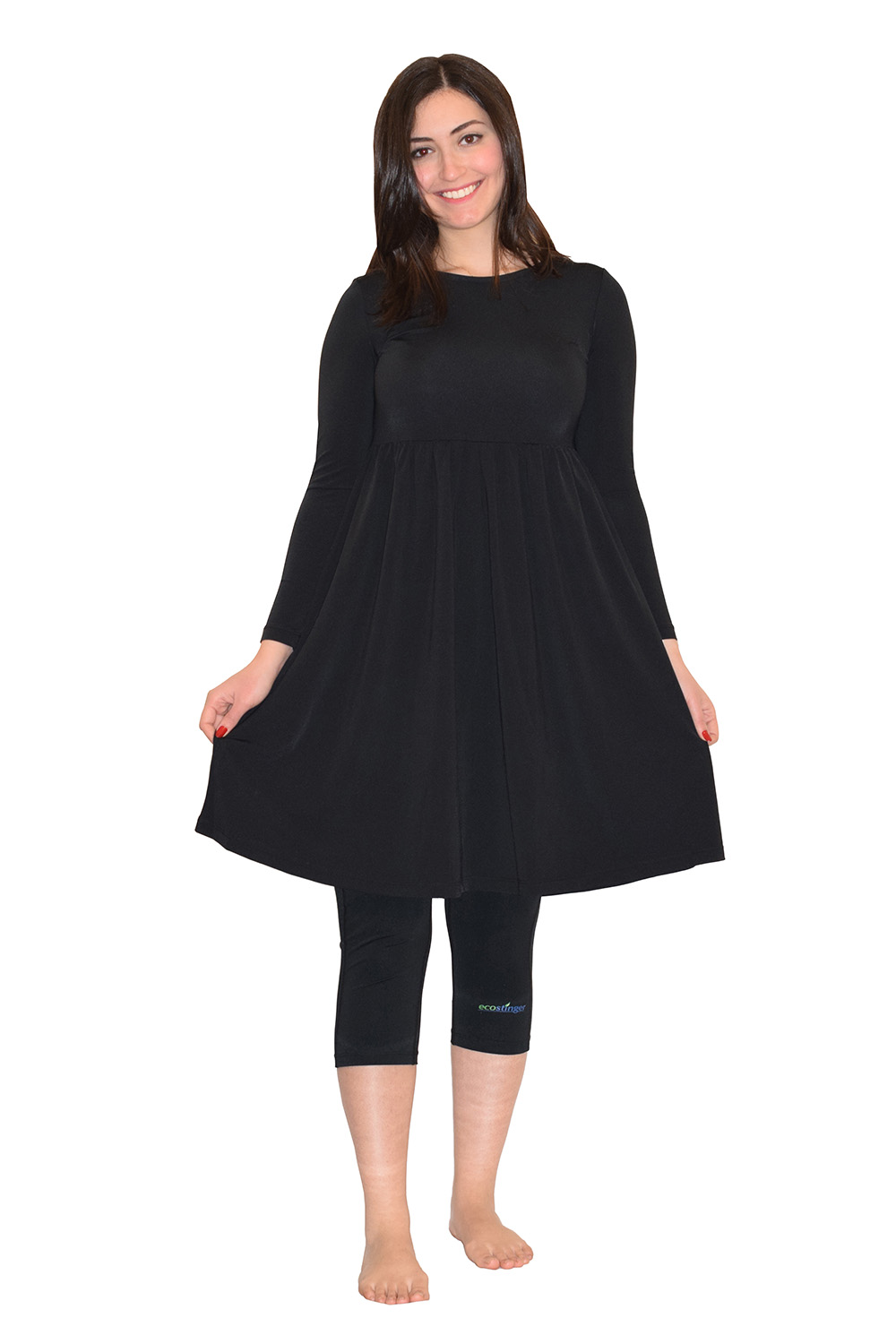
Factors Affecting the Level of UV Protection Swimwear
Your swimsuit's UV protection depends on six things working together: the tested performance of the fabric, how tightly it is constructed, whether it is wet, how far it is stretched, how much skin it covers, and what condition it is in after a season of sun, salt, and chlorine. A UPF label tells you about the first factor under controlled conditions. Everything else is decided by the garment you choose, how it fits, and how you care for it.
That distinction shapes every buying decision. A bikini cut from UPF 50+ fabric blocks UV well across the small area it covers, while the skin around it gets no protection at all. A long-sleeved rash guard made from the same fabric shields far more of your body. Both carry the same rating, yet they give you very different results at the beach.
Sun-protective swimwear is one of the most dependable forms of UV protection for time in the water, because it does not wash off or need reapplying. To get its full benefit, you need to know which factors change how much UV passes through the fabric and which change how much skin is exposed. That knowledge lets you compare labels, choose a fit that holds its rating, and recognize when a favorite suit has stopped doing its job.
What Does a Swimwear UPF Rating Actually Measure?
A UPF rating measures how much ultraviolet radiation passes through a fabric sample in a laboratory, expressed as a ratio. The rating describes the material, and it says nothing about how much of your body the garment covers. Higher numbers mean less UV transmission, standardized testing makes ratings comparable between brands, and the label carries specific limits worth knowing.
How Do UPF 30, UPF 50, and UPF 50+ Compare?
The ultraviolet protection factor (UPF) works as a fraction. A UPF 30 fabric lets roughly 1/30 of UV radiation through, which is about 3.3%. A UPF 50 fabric allows about 1/50, or approximately 2%, under test conditions. A UPF 50+ label means the fabric transmitted less than 2% in testing, so it blocks more than 98% of the measured UV.
The gap between those numbers looks small as a percentage, yet it is meaningful in terms of dose. Moving from UPF 30 to UPF 50 cuts the UV reaching your skin through the fabric by roughly 40%. Labels stop at 50+ because measurements above that level become less reproducible from sample to sample, and the practical difference to your skin is minor.
Under US labeling practice, UPF 15 to 24 is classed as good, 25 to 39 as very good, and 40 to 50+ as excellent. The Skin Cancer Foundation requires a UPF of 50 for its Seal of Recommendation. For swimwear you will wear for hours in strong sun, UPF 50 or 50+ gives you the most margin when wetness, stretch, and wear start eroding performance.
How Does UPF Differ From SPF?
UPF and SPF come from different tests. SPF applies to sunscreen and is determined by measuring how much more UV exposure skin can take before reddening when sunscreen is applied, a response driven mainly by UVB rays. Broad-spectrum labeling on sunscreen addresses UVA separately. UPF is measured directly on fabric with a spectrophotometer across the UV range, weighted for how strongly each wavelength causes sunburn, so it accounts for both UVA and UVB.
The practical difference shows up at the beach. Sunscreen performance depends on how thickly you apply it, and most people use far less than the amount used in SPF testing. It also wears off with swimming and towel drying. A fabric's UPF does not depend on application, so the protection you get from a rash guard is more consistent across the day, as long as the fabric stays in good condition and covers the skin in question.
What Do Testing Standards and Labels Tell You?
A credible UPF label tells you the fabric was measured using a recognized method. In the US, the common framework pairs AATCC Test Method 183 for measuring UV transmission with ASTM D6544, which prepares samples by simulating use, and ASTM D6603, which governs labeling. ASTM D6544 conditioning includes laundering and simulated sun exposure, and swimwear fabrics are also exposed to chlorinated water before testing. That means a properly labeled US garment's rating reflects some aging, which is a useful detail to look for on brand websites.
Australia pioneered UPF standards with AS/NZS 4399 in 1996, and ARPANSA has long tested clothing under it. A later revision added requirements for how much of the body a garment must cover before it can claim sun protection, closing a gap that let brief swimwear carry high fabric ratings. When you see an ARPANSA-tested label or a reference to AS/NZS 4399:2017, you know coverage was part of the assessment.
A label without a named standard or test reference gives you less assurance. Terms such as "UV-protective" or "sun-safe" carry no defined meaning on their own, so look for a specific UPF number and, where possible, the standard behind it.
Which Fabric Properties Provide Better UV Protection?
UV protection in swimwear fabric comes from how little open space the fabric leaves and how effectively its fibers, dyes, and additives absorb or scatter UV. Construction density, fiber type, color depth, thickness, and finishes all contribute, and no single property guarantees UPF 50+ on its own.
Why Do Fabric Density and a Tight Weave or Knit Matter?
UV passes most easily through the gaps between yarns, so fabric density is the foundation of protection. Most swimwear fabric is knitted for stretch, and a tightly knitted fabric with small, closely packed loops leaves fewer openings for UV to travel straight through. Researchers call this the cover factor: the share of the fabric's surface occupied by yarn.
You can run a rough check in a store. Hold the fabric up to a bright light, relaxed and then gently stretched. If you see pinpoints of light, UV is passing through those same openings. A fabric that stays uniformly opaque is a better candidate, though this check cannot replace a lab rating, because UV and visible light do not behave identically.
How Do Polyester, Nylon, and Elastane Affect Performance?
Polyester swimwear performs well because polyester fibers absorb UV strongly in their chemical structure. Nylon is somewhat less absorbent but still performs well in dense constructions, which is why nylon and elastane blends have been used in rash vests for decades. Elastane (often sold as spandex or LYCRA) supplies stretch and recovery; it contributes little UV blocking itself and makes up a minority of the blend.
Fiber composition sets the potential, and construction determines whether a fabric reaches it. A thin, open polyester knit in a pale shade can test well below UPF 30, while a dense nylon blend in a deep color can reach 50+. That is why "made from polyester" on a label tells you less than a tested UPF number. Blends with a higher elastane share also stretch more when worn, which opens the knit, so a fabric's composition affects how it holds up on your body as well as on the test bench.
How Much Do Color, Weight, and Thickness Matter?
Darker and more saturated colors absorb more UV, so a navy, black, or deep red version of a fabric tends to score higher than the same fabric in white or pastel. Within one color family, a richer shade outperforms a paler one. Prints matter too: a print on a white base leaves the unprinted areas closer to the base fabric's performance.
Fabric weight and thickness add protection by giving UV more material to pass through. A heavier swim knit blocks more than a lightweight one of the same fiber and color, with a trade-off in drying time and warmth. If you are choosing between two unrated suits, the darker, heavier, more opaque option is the safer bet. If both carry tested ratings, trust the rating over appearance, because some lightweight UPF fabrics use engineered yarns and additives to reach high values.
How Do UV Finishes and Built-In Additives Work?
UV finishes are chemical absorbers applied to fabric during dyeing or finishing. They convert UV energy into small amounts of heat, raising the fabric's UPF without changing its look. Built-in additives work differently: mineral particles such as titanium dioxide or zinc oxide are mixed into the fiber as it is made, where they scatter and reflect UV much like the same ingredients in mineral sunscreen.
The distinction affects durability. Additives locked inside the fiber stay put for the life of the garment, while surface finishes vary in how well they survive repeated washing, chlorine, and abrasion. When a brand states that its UPF is built into the yarn, or that the rating holds after a specified number of washes, you have more confidence the protection will last. Without that information, treat a finish-based rating as strongest when the garment is new.
Does Protection Change When Swimwear Gets Wet or Stretches?
Yes, wetness and stretch both change how much UV passes through UPF swimwear, and the size of the change depends on the fabric. Water alters how light moves through fibers and gaps, stretching opens the knit, and most labels report results for dry fabric at rest.
Why Can Wet Fabric Transmit UV Differently?
Water fills the air spaces between and inside fibers. Air scatters light at every fiber surface, and water reduces that scattering, so more UV travels straight through. The effect is dramatic in some fabrics: a white cotton T-shirt with a UPF of around 7 dry drops to about 3 when wet.
Synthetic swim fabrics behave differently. Polyester absorbs very little water, and some studies have found certain polyester fabrics protect about the same or slightly better when wet. Nylon absorbs more moisture than polyester, and its wet-state performance varies with the specific fabric. You cannot predict the outcome from fiber type alone, which is why wet-state data from the brand is useful when you can find it.
How Does Overstretching Reduce Fabric Coverage?
When knit fabric stretches, its loops elongate and the gaps between yarns widen. UV transmission rises as the open area grows, and the drop in UPF can be substantial in thin fabrics stretched hard. This change happens in the fabric itself, separate from any change in how much skin the garment covers.
Stretch is concentrated where your body pushes hardest against the fabric: across the shoulders, chest, hips, and seat. A suit that tests at UPF 50+ in a relaxed swatch may transmit noticeably more UV across those areas if it is a size too small. If the color lightens visibly when the fabric is pulled taut on your body, the knit is opening up.
What Should You Check About Wet and Stretched Testing?
Look for whether the brand states how its rating holds up under wet or stretched conditions. US standards prepare swimwear samples with laundering, simulated sun exposure, and chlorinated water before measurement, though they do not require testing in a wet or stretched state. Treat the label as a measurement of dry, relaxed, conditioned fabric unless the brand says otherwise.
Some manufacturers publish additional results, such as UPF measured wet or at a defined stretch percentage. Those figures give you a clearer picture of performance in the water. When they are absent, build in margin by choosing UPF 50+, a dark or saturated color, and a fit that does not pull the fabric tight. Those choices protect your rating in exactly the conditions the label does not describe.
How Do Fit and Coverage Affect Real-World Protection?
Coverage determines how much of your skin benefits from the fabric's rating, so it has as large an effect on real-world protection as the UPF number. A high-UPF garment that leaves your back and shoulders bare protects less of you than a slightly lower-rated garment covering your full torso and arms. Garment cut, openings, and fit all shape the result.
Why Can Rash Guards Protect More Skin Than Standard Swimsuits?
Rash guards cover the torso, shoulders, and arms, which are among the areas that burn most during water activities and the hardest to keep coated with sunscreen while swimming. Research in Australian children found that sun-protective clothing covering more of the body, made from darker, tightly constructed fabric, slowed the development of pigmented moles, a major marker of melanoma risk. That finding links protection to coverage as well as fabric rating.
For children, an all-in-one sun suit or a long-sleeved rash guard with swim leggings covers the most skin with a single garment. For adults, pairing a long-sleeved rash guard with board shorts or swim leggings gives you broad coverage while leaving room for movement. A standard one-piece or bikini made from UPF fabric protects the skin underneath it well and leaves the rest to sunscreen.
How Do Necklines, Sleeves, Mesh, and Cutouts Change Coverage?
Each design detail adds or subtracts protected skin. A high crew neck or mock neck shields the upper chest and base of the neck, while a scoop or V-neck exposes them. Long sleeves protect your forearms, which take heavy sun during paddling, surfing, and boating; short sleeves leave them uncovered.
Mesh panels and cutouts are the details to watch most closely. Mesh is open by design and transmits far more UV than the main fabric, so a panel across the back or sides behaves like partly exposed skin. Cutouts and strappy backs create sharply defined areas that burn easily and are easy to miss with sunscreen. If you like a design with these features, apply sunscreen to the exposed areas before you dress, when you can see them clearly.
What Fit Keeps Swimwear in Place Without Overstretching?
A good fit stays put in the water without pulling the fabric taut. When you try on a suit, raise your arms overhead, bend forward, and squat. The fabric should move with you without riding up, gaping, or turning visibly lighter over your shoulders, chest, or hips.
Rash guards benefit from a close but relaxed fit: snug enough that they do not balloon or drift up in the surf, with enough ease that the fabric is not stretched across your back. If you are between sizes, the larger size usually preserves more of the fabric's protection. Check that the hem stays near your waistband when you reach, so a band of skin does not open up across your lower back.
How Do Chlorine, Wear, and Washing Affect Protection?
Chlorine, sun, salt, and repeated washing gradually break down fibers, dyes, elastane, and some UV finishes, and each of those changes lowers protection over time. How quickly that happens depends on the fabric and your care routine, so durability features and good habits extend your suit's protective life.
Why Does Chlorine Resistance Matter for Fabric Durability?
Chlorine attacks elastane first. As elastane weakens, the fabric loses recovery and starts to sag, bag, and stretch more on your body, which opens the knit and raises UV transmission. Chlorine also fades dyes, and since color depth contributes to UPF, fading reduces protection along with appearance.
Polyester swimwear resists chlorine far better than nylon and elastane blends, which is one reason many pool-focused suits use high-polyester fabric or chlorine-resistant elastane. If you swim laps several times a week, chlorine resistance is worth prioritizing. For occasional beach use, a nylon blend with good UPF performs well, though salt water and strong sun still age it over time.
How Can You Care for UV-Protective Swimwear?
Rinse your suit in cool, fresh water as soon as you can after swimming, to remove chlorine, salt, and sunscreen residue before they sit in the fabric. Hand wash or use a gentle cycle with mild detergent, and skip bleach and fabric softener, which can damage fibers and some UV finishes. Follow the care label, since it reflects how the fabric's finishes were designed to hold up.
Dry your suit flat or hanging in the shade. Direct sun fades dyes and degrades elastane while the suit dries, and a hot dryer breaks down elastane faster still. Wringing hard stretches the fabric, so press water out gently in a towel. Rotating two suits gives the elastane in each time to recover between wears, which helps both keep their shape longer.