
What Type of People Prefer Full Body Coverup Swimsuit Styles?
Posted by ecostinger on 15th Oct 2026
People who prefer a full coverage swimsuit or as called in Australia a stinger suit or dive skin usually choose it for a practical reason. Lap swimmers want a suit that stays put. Outdoor swimmers want more skin shielded from the sun. Some people follow religious or cultural modesty preferences, and parents chasing kids want to move without adjusting straps. Plenty of others just like how more fabric feels on certain parts of the body.
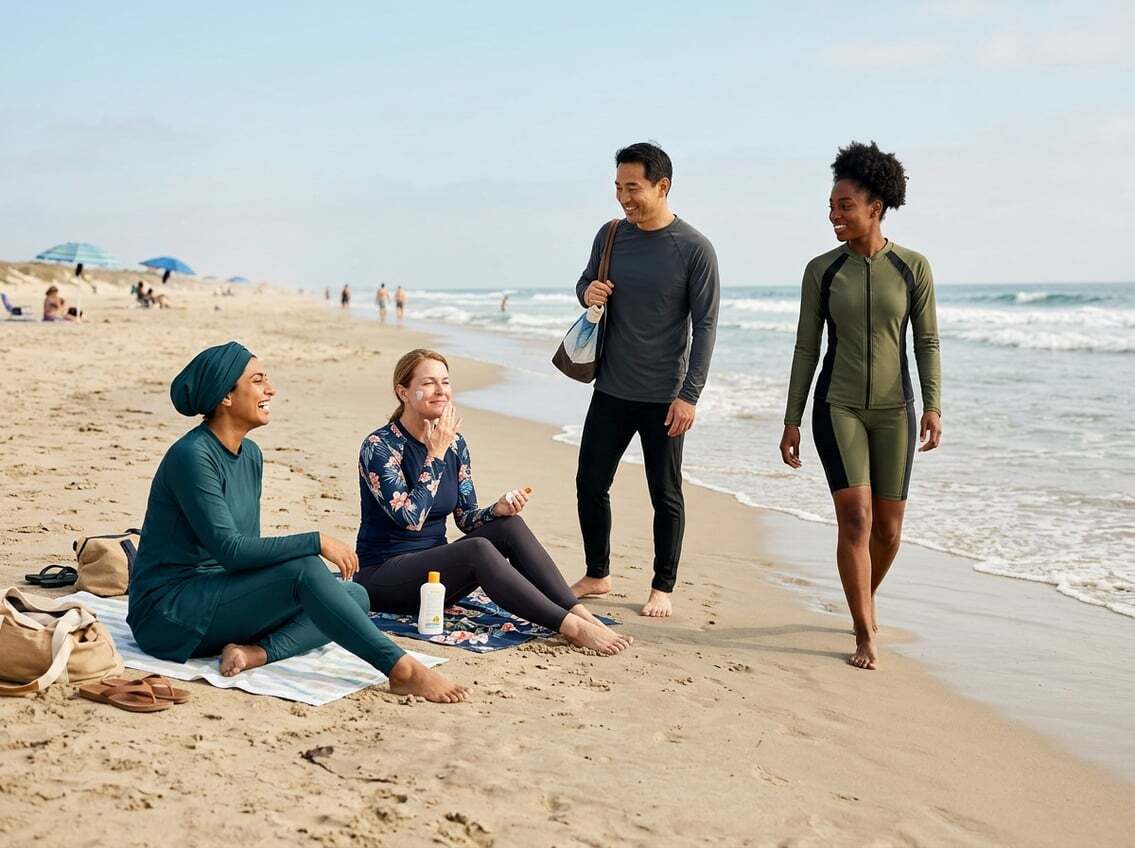
None of these reasons are tied to age or body type. A 20-year-old surfer and a 60-year-old ocean swimmer can pick the same high-neck suit for the same reason: it holds firm in waves.
"Full body coverup" also means different things to different people. One shopper means the bust, another means the rear, and another means the back. Once you know which area you care about, you can judge whether a suit fits your own definition of coverage, and skip the ones that only look covered on a hanger.
Coverage Preferences by Lifestyle and Need
Each group below chooses full coverage swimwear for a specific reason, and each reason points to a different part of the suit: bust and back for active swimmers, sleeves and UPF-rated fabrics for sun exposure, and rear and midsection panels for people who want less adjusting.
Active Swimmers Who Want a Suit That Coverup and Stays Put
If you swim laps, dive, or swim through surf, a fuller cut shifts less. Push-offs from the pool wall and waves breaking over you tug at small panels. More fabric across the rear and a covered or balanced back anchor the suit to your body.
The parts to check:
- Rear coverage: a full seat stays in place through flip turns.
- Back coverage: a higher back or racerback keeps straps from sliding off your shoulders.
- Fabric: chlorine-resistant fabrics feel firmer and hold their shape through repeated sessions.
A fully open back gives the most freedom of movement for your arms. A balanced back, with straps that cross or meet mid-back, sits between the two and works for many regular swimmers.
Outdoor Enthusiasts and Athletes Swimmers
- Water Sports Fans: People who enjoy high-intensity activities like surfing, paddleboarding, wakeboarding, and beach volleyball need swimwear with special cover and protection needs. Full body coverage swimsuit options prevent wardrobe malfunctions and friction rashes.
- Divers and Kayakers: Open-water adventurers often wear full-body suits or rash guards to protect their skin from minor cuts, reef scrapes, and jellyfish stings.
Outdoor Swimmers Seeking More Sun Protection Cover
Australia has some of the highest UV levels in the world, so many swimmers here treat coverage as sun protection. Every extra centimetre of fabric is skin you don't need to reapply sunscreen on halfway through a long ocean swim.
Look for UPF-rated fabrics. A UPF 50+ label means the fabric blocks most UV rays or 97.5% of the sun's UV radiation. Then think about which areas burn first for you: shoulders, upper back, and the backs of your thighs are common ones. Long sleeves, high necks, and covered backs handle those zones. These styles can feel warm on a still, hot day, which is worth weighing if you mostly lounge on the sand.
People with Religious or Cultural Modesty Preferences
Modest swimwear lets you swim while following your own faith or cultural guidelines. Needs vary a lot between people, so the details you look for will be your own.
Common features include:
- High necklines and full upper-chest coverage
- Long sleeves to the wrist
- Leggings or swim pants to the ankle
- Tunic-length tops that cover the hips
- Optional swim hoods or head coverings
Check that the fabric stays opaque when wet. Light colours and thin linings can turn sheer once soaked, which matters a great deal if coverage is the whole point.
Parents and Care Givers Who Need Coverage and Easy Movement
When you're lifting a toddler out of the pool or crouching at the water's edge, you want a suit that doesn't need fixing every few minutes. Fuller cuts stay where you put them when you bend, squat, and reach.
Focus on a secure bust with wide straps, a back that holds the straps in place, and bottoms with a moderate leg line. Two-piece styles like tankinis also make bathroom trips quicker, which helps when you're on duty all day.
Demographics Managing Body Changes
- Aging and Size Demographics: Apparel industry research indicates that a preference for body coverage frequently increases with age and dress size. Plus-sized women often prefer enhanced hip, leg, and torso support for comfort and confidence.
- Postpartum and Medical Transitions: Women navigating postpartum body changes, individuals hiding surgical scars, or those managing body anxieties find that full-coverage alternatives provide a flattering, relaxed fit that glides over the body.
Anyone Seeking More Bust, Midsection, Back, or Rear Coverage
Some people just prefer more fabric on one area. That's a personal choice, and it helps to name the area before you shop:
- Bust: higher necklines, wider straps, and built-in cups or underbust bands.
- Midsection: one-pieces, tankinis, or high-rise bottoms.
- Back: higher back panels or zip styles.
- Rear: bottoms labelled full coverage or full seat.
- Legs: boyshorts, swim shorts, or skirted styles for upper-thigh coverage.
Coverage and support are separate things. A suit can cover your whole bust and still give little lift if it lacks structure.
How to Match a Suit to the Coverage You Want
Pick the style by the body area you want covered, then confirm it with a fit check. One-piece swimsuits secure the torso, tankinis and high-waisted bikinis cover the midsection with two-piece ease, and rash guards handle long hours in the sun.
When Is a One-Piece the Most Secure Choice?
A one-piece swimsuit is the most secure option for active swimming because nothing can separate at the waist. It also gives the most built-in support of any style, especially with an underbust band or shelf bra.
Not every one-piece meets every definition of full coverage. Open-back, cut-out, and high-cut leg designs can show as much skin as a bikini in some areas. Look closely at three spots:
- Neckline: a square neck covers more chest than a plunge or deep scoop.
- Back: check how low the back dips and where the straps sit.
- Leg line: a lower, moderate leg opening gives more hip and rear coverage.
Named styles like the Leah Square Neck One Piece or the Mika One Piece Full Cut show the kinds of features to look for. Treat them as examples and check the brand's photos and size guide to see whether the neckline, back, and seat match what you want.
How Do Tankinis and High-Waisted Bikinis Compare?
Tankinis cover more of your midsection, while high-waisted bikinis leave a gap of skin between the top and bottoms. Both give you two-piece freedom.
Tankinis use longer tankini tops that reach the waist or hips. Modern versions are fitted through the body and sit at the natural waist. You can mix sizes, which helps if your top and bottom measurements differ.
High-waisted bikini sets pair a regular top with high-waisted bottoms that reach the navel or above. They cover the lower stomach well.
A high waist does not guarantee full rear coverage. Many high-waisted bikini bottoms rise tall at the front and still use a cheeky cut at the back. Always check the back view.
Which Bikini Bottom Cuts Offer Full Rear Coverage?
Full coverage bikini bottoms cover the whole seat, with the leg opening sitting low across the crease of the bum. Bikini bottom styles fall into three rough levels:
- Cheeky: shows part of the rear.
- Moderate coverage bikini bottoms: cover most of the seat with a little lift at the edges.
- Full coverage: covers the entire seat.
Boyshorts and swim shorts go further and cover part of the thigh. Product names such as the Pin Up Star Full Bottom and the Barcelona High Waist hint at coverage, but names can mislead. A "high waist" label describes the rise, not the back, so read the product description for words like "full seat" and look at rear photos on a model.
When Might a Swim Dress or Sarong Help?
A swim dress suits you if you want upper-thigh and hip coverage while still swimming. Swim dresses are one-pieces with an attached skirt, and many have built-in shorts underneath so the skirt stays modest in the water.
A sarong works best out of the water. It wraps over any suit for walking to the kiosk or sitting at a beach café. Sarongs get heavy and tangle when wet, so take it off before you swim. For lightweight cover between dips, pick a quick-dry fabric.
Are Rash Guards a Better Choice for Extended Sun Exposure?
Rash guards are the strongest choice for long hours in the sun. A long-sleeve rash guard with a UPF 50+ rating covers your arms, shoulders, and back, the areas that burn fastest during surfing, snorkelling, or a full beach day.
You can wear a rash guard top over a bikini or pair it with swim leggings for head-to-toe cover. Zip-front styles are easier to take on and off when wet. If you snorkel or dive, it helps to know how a rash guard compares to other full-body options, and this breakdown of the difference between a stinger suit, dive skin, wetsuit, and drysuit explains which suits function best during warm tropical water versus cooler conditions.
Brands EcoStinger sell rash guards sunsuits and fuller-cut stinger suits and dive skins styles. Check each item's listed UPF rating, since ratings differ across products.
How Can You Check Coverage Before Buying?
You can check most coverage details from the product page and a quick at-home test. Use this list:
- Look at the back photo. Rear and back coverage are often hidden in front-only shots.
- Read the fabric details. Look for a UPF rating, lining, and chlorine resistance.
- Check the leg line. A high-cut leg reduces rear and hip coverage even with a "full" back panel.
- Do the squat test. At home, squat, lift your arms overhead, and bend forward. Note anything that shifts or gapes.
- Test opacity. Wet a hidden corner or check reviews for comments about sheerness, especially on light colours.
- Check strap width and adjustability. Wider, adjustable straps hold the bust and stay on your shoulders.
- Read the returns policy. Many swimwear sellers only accept returns with the hygiene liner still attached, so try suits on over underwear.
Take a photo of yourself in a suit that fits the way you like. When you shop online next, compare new styles against that photo to spot the neckline, back, and leg line that work for you.